Pit Boss vs recteq: I Cook on Both, Here Is Where Your Money Actually Goes
Pit Boss vs recteq compared on build, temperature control, searing, warranty, and price per square inch. Real bench numbers, owner complaints, and who each brand fits.
 By Oleg Galeev, cooking on pellet grills since 2020, runs the OleGrill YouTube channel
Short answer
recteq wins if the budget stretches: stainless build, a 6 year warranty, controllers that hold temp within a degree or two, and the 8.6-scoring Flagship 1600. Pit Boss owns the entry fight, with the $749 Sportsman and a flame broiler for direct searing that no recteq near that money matches.
Live prices. Affiliate links: we may earn a commission at no extra cost to you. How this works.
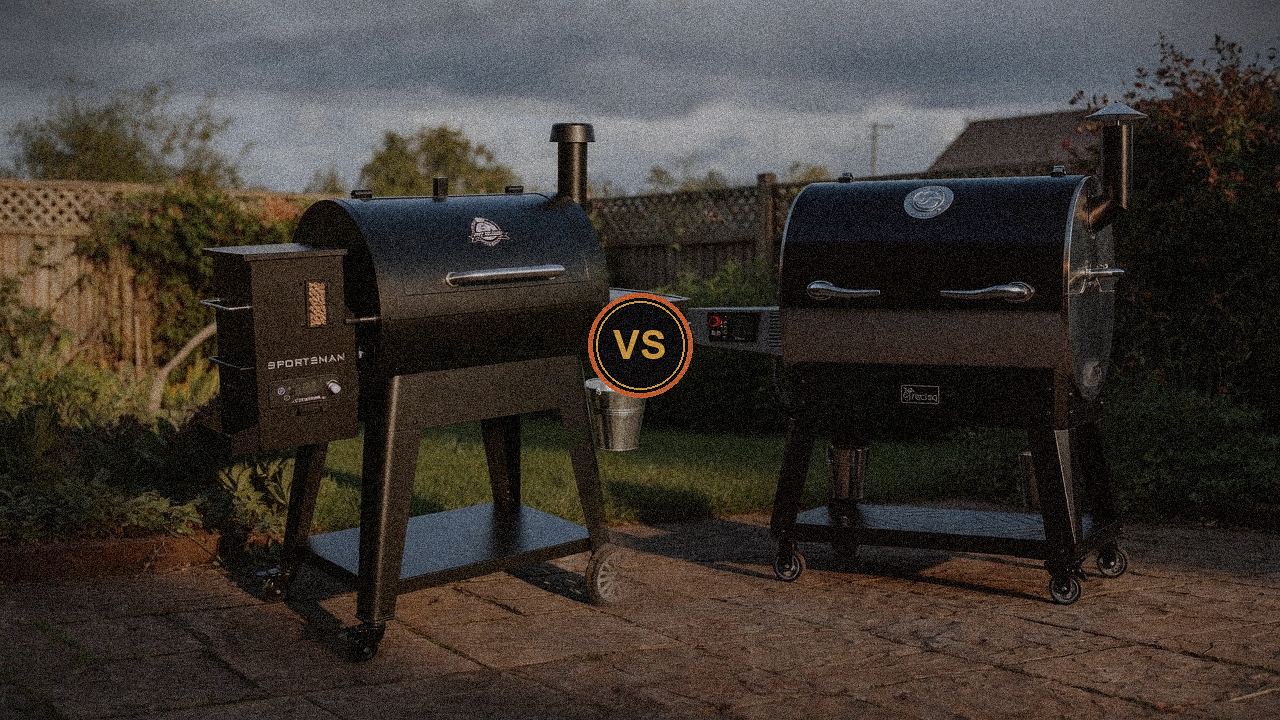
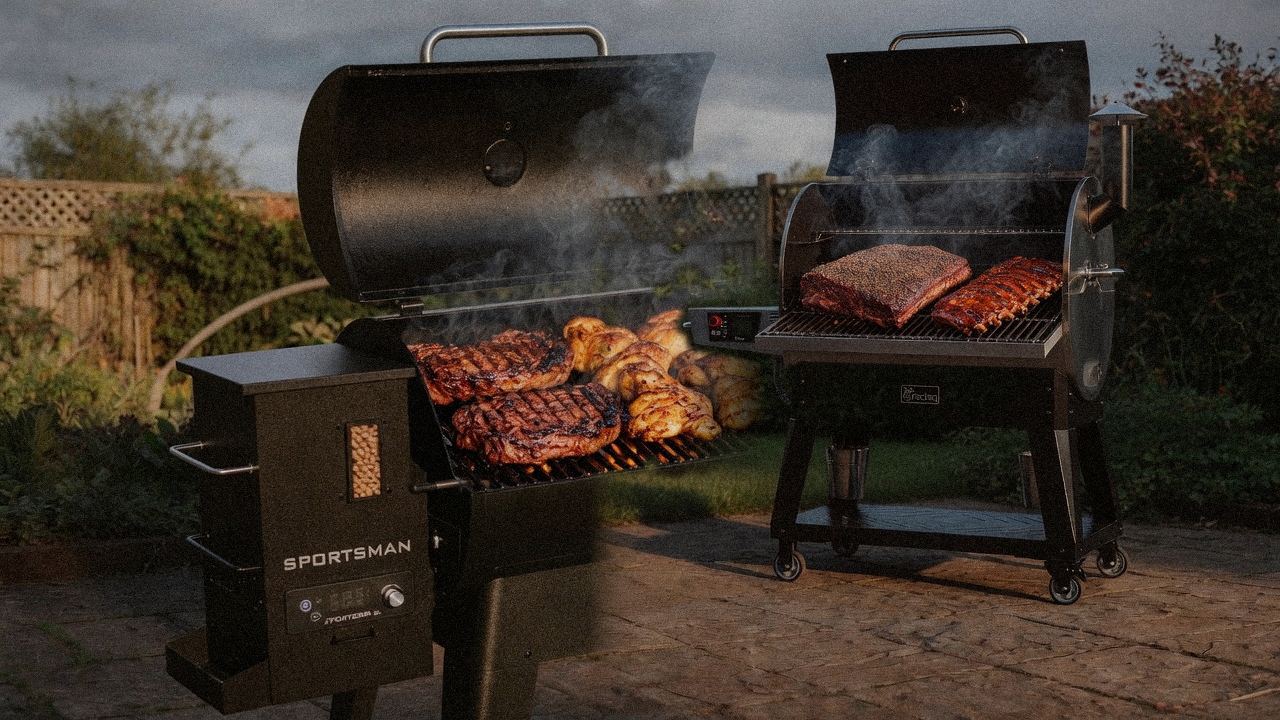
The slider handle on the Pit Boss was too hot to grab bare-handed, which is exactly the point of it. I pulled the flame broiler open, dropped a ribeye over live fire, and got a crust in about four minutes. Ten feet away the recteq Flagship 1600 was doing something completely different: sitting at 225°F like it was bolted to the number, hour after hour, a brisket sweating away inside a stainless chamber. That afternoon is the whole Pit Boss vs recteq argument in miniature. One brand sells you fire and a low ticket price. The other sells you steel and precision. After years of running both for the OleGrill channel, here is where each dollar actually goes. It is one of the matchups behind the best wood pellet grills rankings on this site.
Pull temps still follow the USDA safe minimum internal temperatures for poultry, pork, and ground beef, no matter which hopper you bought.
Warranty language is what recteq's support center actually publishes, not a forum guess.
How do Pit Boss and recteq compare at a glance?
Pit Boss puts a flame broiler and a 5 year warranty on grills starting at $749. recteq starts higher at $900 but tops out with the Flagship 1600: 1,659 sq in, a 40 lb hopper, a 700°F ceiling, 6 years of warranty, and the highest score I have recorded, an 8.6.
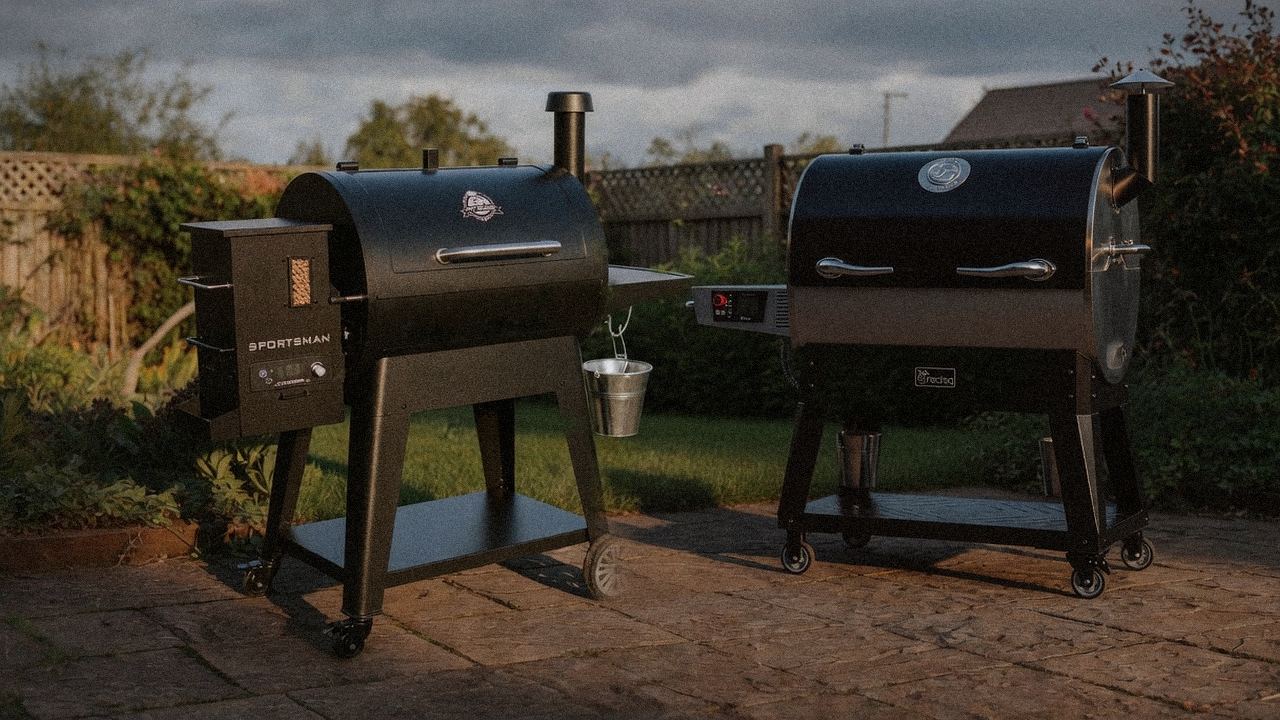
The representative models side by side, straight from my spec sheet. A dash means I do not have a verified number for that cell, and I will not guess one.
| Spec | Pit Boss Sportsman | Pit Boss Pro 1150 | recteq Deck Boss | recteq Flagship 1600 |
|---|---|---|---|---|
| Price | $749 | - | $900 | $1,600 |
| Cooking area | 849 sq in | 1,150 sq in | 592 sq in | 1,659 sq in |
| Hopper | 21 lb | 32 lb | - | 40 lb |
| Max temp | 500°F | 500°F | 700°F | 700°F |
| WiFi | Yes | Yes | Yes | Yes |
| Direct sear | Yes | Yes | No | No |
| Warranty | 5 years | 5 years | - | 6 years |
Read the sear row and the max temp row together, because they look contradictory and they are not. Every current Pit Boss in my data caps at 500°F on the dial but has a flame broiler slider that opens the grates to direct flame for searing. recteq runs its dials to 700°F, real convection headroom, but the big smokers have no direct-flame mode. Two different theories of heat, and which one fits you decides half this matchup.
Which brand is built to last?
recteq, clearly. The Flagship 1600 scored 9.3 for build quality on my card, the highest of any grill I have tested, on stainless construction where Pit Boss uses painted steel. recteq also backs its flagship for 6 years against Pit Boss's 5, and its support keeps resolving the issues owners do hit.
Pit Boss build quality is honest for the money. Nothing about a Sportsman feels fragile when you wheel it around, and a 5 year warranty across the lineup is better paper than most budget brands offer. But painted steel living outdoors next to grease and heat is where rust starts, and there is no version of this comparison where a painted chamber beats a stainless one over a decade. Put a hand on the Flagship's lid and the argument ends before it starts.
The after-sale story leans the same way. In the owner reports I track, the Flagship 1600's early issues, including occasional initial auger problems, keep ending with the same phrase: resolved by support. That pattern is worth as much as the sixth warranty year. recteq even kept parts and support flowing for the discontinued RT-700 Bull, the grill the Flagship replaced. Pit Boss's discontinued models tell a different story, which I get into in the complaints section below.
If you want to see recteq's build argument stress-tested against a bigger brand instead of a cheaper one, my recteq vs Traeger matchup runs the same fight uphill.
Which one holds temperature better?
The recteq. Its Flagship 1600 scored 9 for temp accuracy and 9 for stability on my bench, the controller precision the brand is known for. The current Pit Boss Pro series has not been through my graded card yet, but the discontinued Competition 1250 drew owner reports of huge temp swings.
Here is the full graded card for the recteq flagship, every dimension I score:
| Dimension | recteq Flagship 1600 |
|---|---|
| Temp accuracy | 9 |
| Temp stability | 9 |
| Smoke output | 8 |
| Build quality | 9.3 |
| Searing | 7.5 |
| Ease of use | 9 |
| Cleaning | 8 |
| App | 9 |
| Pellet efficiency | 8.5 |
| Value | 8 |
| Overall | 8.6 |
I have cooked plenty on the Pit Boss side, but those models have not been through the same graded scorecard, so I will not print invented numbers next to them. What I can print is the owner record. The worst controller complaint in my Pit Boss file belongs to the Competition Series 1250, where owners reported huge temp swings; Pit Boss has since discontinued it and the Pro 1150 is its replacement. That is the right move, and I have no equivalent swing reports on the current Pro series. Even so, the pattern matters: recteq's identity is built on the controller, and a 9/9 accuracy-stability card on a pellet grill is about as good as the category gets. On the recteq side the isolated temp-inaccuracy reports come from early Flagship reviews, and they read as unit-level defects that support handled, not a design personality.
Which one sears a steak better?
Pit Boss, at the price points where the two brands actually overlap. Every current Pit Boss in my data has a flame broiler for direct-flame searing, while the recteq Flagship and Deck Boss have none, and the Flagship's 7.5 sear score reflects that. recteq's answer, the 1,000°F Bullseye Deluxe, is a separate purchase.
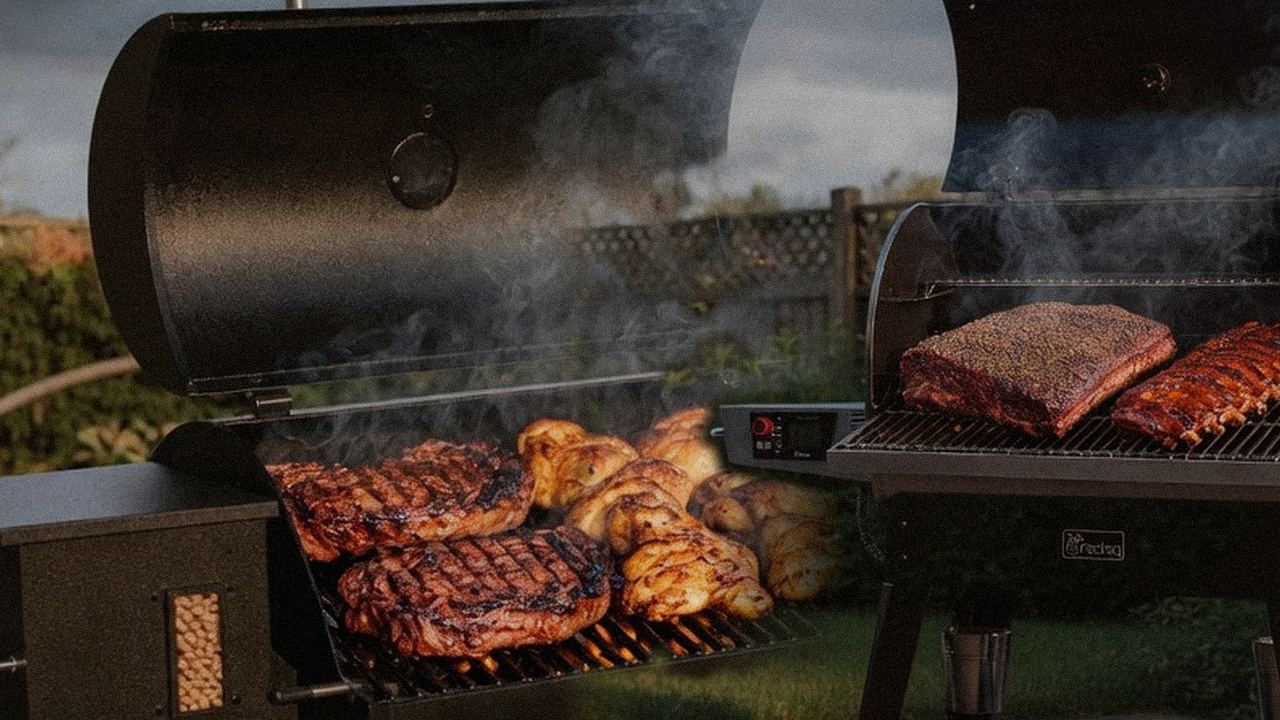
This is the round Pit Boss fans lead with, and they are right to. The flame broiler slider is a genuinely great piece of budget engineering: pull it open and the deflector exposes the grates to live flame, so a $749 Sportsman puts a crust on a steak that a $1,600 Flagship cannot match with its 700°F of indirect heat. My 7.5 sear score for the Flagship is respectable for a convection-only smoker, and 700°F crisps wings and finishes tri-tip better than any 500°F machine. But direct flame is direct flame.
recteq's catalog does answer, just not in the same box. The Bullseye Deluxe runs to 1,000°F with true direct searing on a portable 380 sq in body with an 18 lb hopper, and the X-Fire Pro 825 pushes 1,250°F at $1,550, though that one I mention without a link. So the honest framing is this: on Pit Boss, searing is included; on recteq, searing is a second grill.
Is recteq worth the extra money over Pit Boss?
Yes, if low-and-slow output is why you are buying. The Flagship 1600's 8.6 is the highest weighted score on this site, earned on build, controller precision, a 40 lb hopper, and 700°F of headroom. If the budget stops near $750, the Sportsman is the honest answer, not a stretched loan.
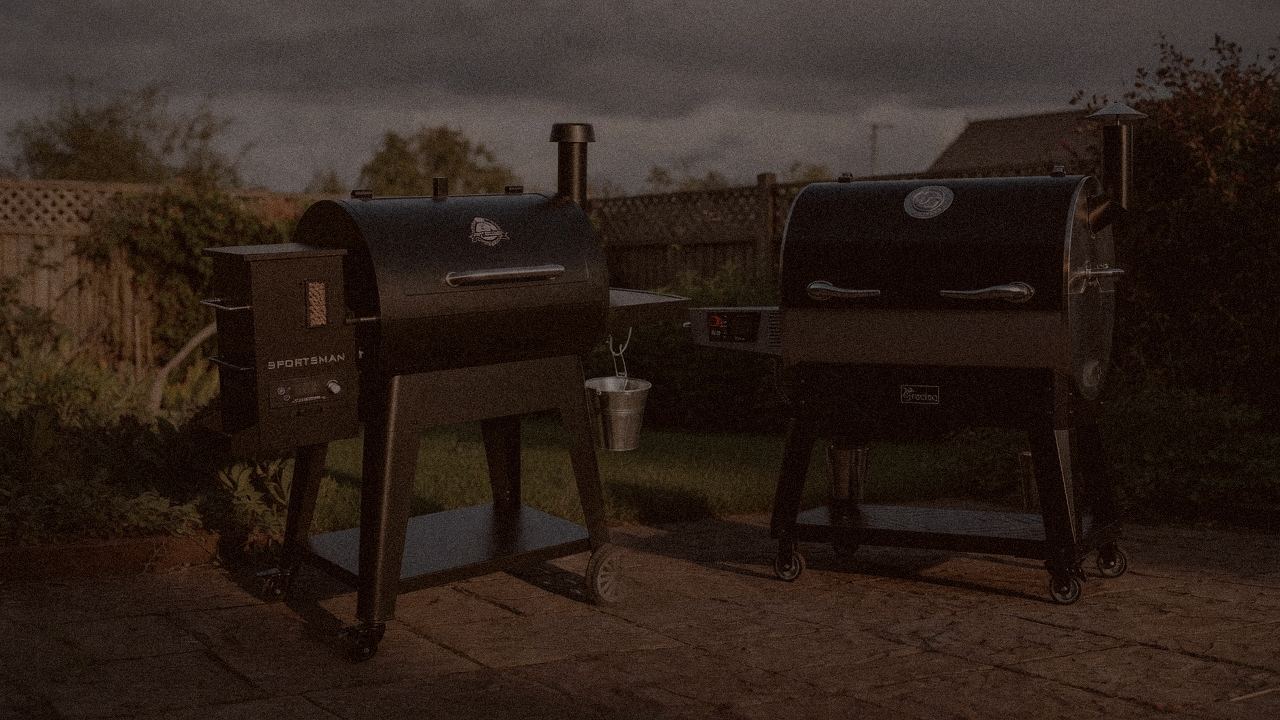
Scores printed as measured, because that is the house rule: the Flagship's 8.6 actually sits above our overall editorial pick, the Weber Searwood XL at rank one. The rank is my tested call on what most buyers should get first; the score is the weighted card. Our top pick sits outside this matchup entirely, so if you want the one-grill answer before committing to either brand here, see the full rankings at /pellet-grills/ and check the current price on the Searwood XL first.
Inside the matchup, the money logic splits at the recteq entry point. Below it, Pit Boss runs unopposed: $749 buys a Sportsman with 849 sq in, WiFi, a flame broiler, and 5 years of paper. From $900 up, recteq's steel and controller start paying rent, and by the time you reach the Flagship you are buying the best-scoring grill I have tested.
What does the value math say?
Pit Boss wins raw price per square inch: the Sportsman costs $0.88 per sq in against the Flagship 1600's $0.96. recteq wins price per warranty year at the flagship level only when you count what the dollars buy: stainless steel, 700°F, and a 40 lb hopper at roughly the same per-inch rate as painted steel.
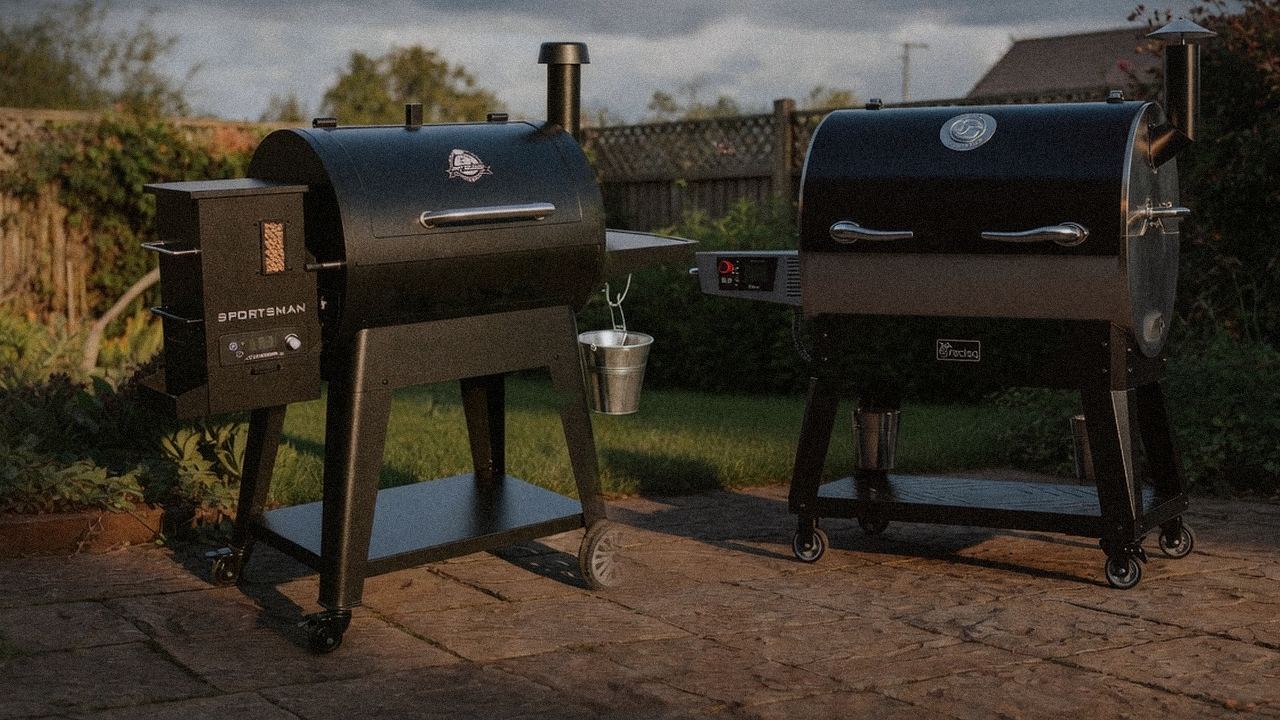
Every row is computed from verified price and area only. Pit Boss models without published prices in my data stay out of the table rather than getting a guess.
| Model | Price | Cooking area | $ per sq in | Warranty | $ per warranty year |
|---|---|---|---|---|---|
| Pit Boss Sportsman | $749 | 849 sq in | $0.88 | 5 yr | $150 |
| recteq Deck Boss | $900 | 592 sq in | $1.52 | - | - |
| recteq Backyard Beast 1200 | $1,200 | 1,220 sq in | $0.98 | - | - |
| recteq Flagship 1600 | $1,600 | 1,659 sq in | $0.96 | 6 yr | $267 |
Two takeaways. First, the Sportsman is the value king of this entire page, and there is no spinning that: $0.88 per square inch with a sear slider included. Second, the recteq premium is thinner than people assume at the top. The Flagship delivers nearly double the Sportsman's cooking area at only eight cents more per square inch, and every one of those inches sits inside stainless steel under a longer warranty. The one weak value cell on the board is the Deck Boss at $1.52 per square inch; you are paying for 700°F and the recteq controller in a small footprint, and the math only works if the footprint is the point.
What do owners actually complain about?
Pit Boss complaints in my file center on the discontinued Competition 1250's huge temp swings, plus the pre-WiFi Austin XL aging out of the lineup. recteq complaints are early-unit quirks on the Flagship 1600 and ignition issues on the budget Bullseye Deluxe, with support usually closing the loop.
I keep a running file of owner reports from Reddit and review threads for every grill I cover, because a spec sheet never tells you what year two feels like.
The shape of the two complaint files is the story. Pit Boss's worst reports attach to controllers and got answered by retiring models. recteq's attach to individual early units and got answered by the support desk. Neither brand is complaint-free, and anyone who tells you otherwise is selling something.
Which one should a first-timer buy?
The Pit Boss Sportsman, for most first-timers, and I say that as the guy whose highest-scoring grill wears a recteq badge. A first pellet grill is a habit test. For $749 the Sportsman gives you 849 square inches, WiFi, a 5 year warranty, and the flame broiler, which quietly matters more for beginners than people admit: your first month on a pellet grill is burgers and chops, not fourteen-hour briskets, and direct flame keeps weeknight cooking fun while you learn the smoking side. If the hobby sticks, you will know within a year exactly which recteq you want next. If it does not stick, you are out $749 instead of $1,600. Budget shoppers cross-checking Pit Boss against its other big rival should read my Traeger vs Pit Boss breakdown before deciding.
Who should spend the extra $850 on the Flagship?
Anyone who already knows the overnight cook is the point. The jump from the $749 Sportsman to the $1,600 Flagship buys you 810 more square inches, 19 more pounds of hopper, 200 more degrees of ceiling, stainless instead of paint, a sixth warranty year, and a controller that scored 9 for accuracy and 9 for stability. If you smoke twice a month or more, that is not luxury spending, it is buying the tool once. The 40 lb hopper alone changes how briskets feel: you sleep, the grill works. And if you are weighing recteq against the other budget stainless-adjacent option instead, my recteq vs Z Grills comparison covers the cheaper end of that question.
So which one wins, Pit Boss vs recteq?
recteq wins this matchup whenever the budget stretches past $900: better steel at a 9.3 build score, a 6 year warranty, a 9/9 controller card, and the 8.6 Flagship 1600 at only $0.96 per square inch. Pit Boss is the right buy near $750, where the Sportsman's flame broiler and $0.88 per inch run unopposed.
Dimension by dimension: recteq takes build materials, warranty length, controller precision, max temperature, hopper capacity, and the best single grill on the board. Pit Boss takes entry price, price per square inch at the bottom of the market, and direct-flame searing on every current model. That reads like a blowout on paper, and for a dedicated smoker it mostly is. But the two brands barely fight for the same customer. Pit Boss is the value tier done well; recteq is the enthusiast tier done well.
The loser's case, stated fairly: buy the Pit Boss if $749 is the honest budget, if searing matters as much as smoking to your household, or if you want one machine that does live-fire steaks and Sunday pork shoulder without a second purchase. It will not hold 225°F like a Flagship and its paint will not age like stainless, but it earns its price. Just do not spend Flagship money on a Pit Boss expecting Flagship steel, and do not buy a Flagship expecting it to sear like a slider over open flame.
Is Pit Boss as good as recteq?
Not on build or control. recteq's Flagship 1600 scored 8.6 overall with a 9.3 build score on stainless construction, against Pit Boss's painted steel and 5 year warranty. Pit Boss is better at the entry price: the $749 Sportsman includes a flame broiler for direct searing that recteq's big smokers lack.
Do recteq grills last longer than Pit Boss grills?
The materials say yes. recteq builds in stainless steel where Pit Boss uses painted steel, and stainless resists the rust that ends most backyard grills. recteq also warranties the Flagship 1600 for 6 years against Pit Boss's 5, and its support record on early-unit issues is strong.
Can a Pit Boss sear better than a recteq?
At the same price, yes. Every current Pit Boss in my data has a flame broiler slider for direct-flame searing, while the recteq Flagship 1600 and Deck Boss are convection-only and the Flagship scored 7.5 for searing. recteq's direct-sear machines, the 1,000°F Bullseye Deluxe and 1,250°F X-Fire Pro 825, are separate models.
Why is recteq more expensive than Pit Boss?
Steel and control. recteq starts at $900 with the Deck Boss and charges $1,600 for the Flagship 1600, paying for stainless construction, 700°F ceilings, a 40 lb hopper, and a controller that scored 9 for accuracy and stability. Per square inch the gap is small: $0.96 for the Flagship against $0.88 for the $749 Sportsman.
Are Pit Boss pellet grills reliable?
The current Pro series has a cleaner record than the brand's past. The discontinued Competition 1250 drew owner reports of huge temp swings before Pit Boss retired it for the Pro 1150, and the old Austin XL shipped without WiFi. I have no equivalent swing reports on the current lineup, which carries a 5 year warranty across the board.