Pit Boss vs Weber Pellet Grills: Big and Cheap Meets Small and Polished
Pit Boss vs Weber after cooking on both lineups: Pit Boss wins square inches per dollar by a mile, the Sportsman is $0.88 per square inch. Weber's Searwood wins searing, measured temp scores, and the app. Real numbers inside.
 By Oleg Galeev, cooking on pellet grills since 2020, runs the OleGrill YouTube channel
Short answer
Weber wins on cooking quality: the Searwood line hits 600°F, sears over direct flame with an 8.3 score, and runs an 8.7 subscription-free app. Pit Boss wins raw size per dollar, the $749 Sportsman gives you 849 square inches. Buy Pit Boss for space, Weber for the better cook.
Live prices. Affiliate links: we may earn a commission at no extra cost to you. How this works.
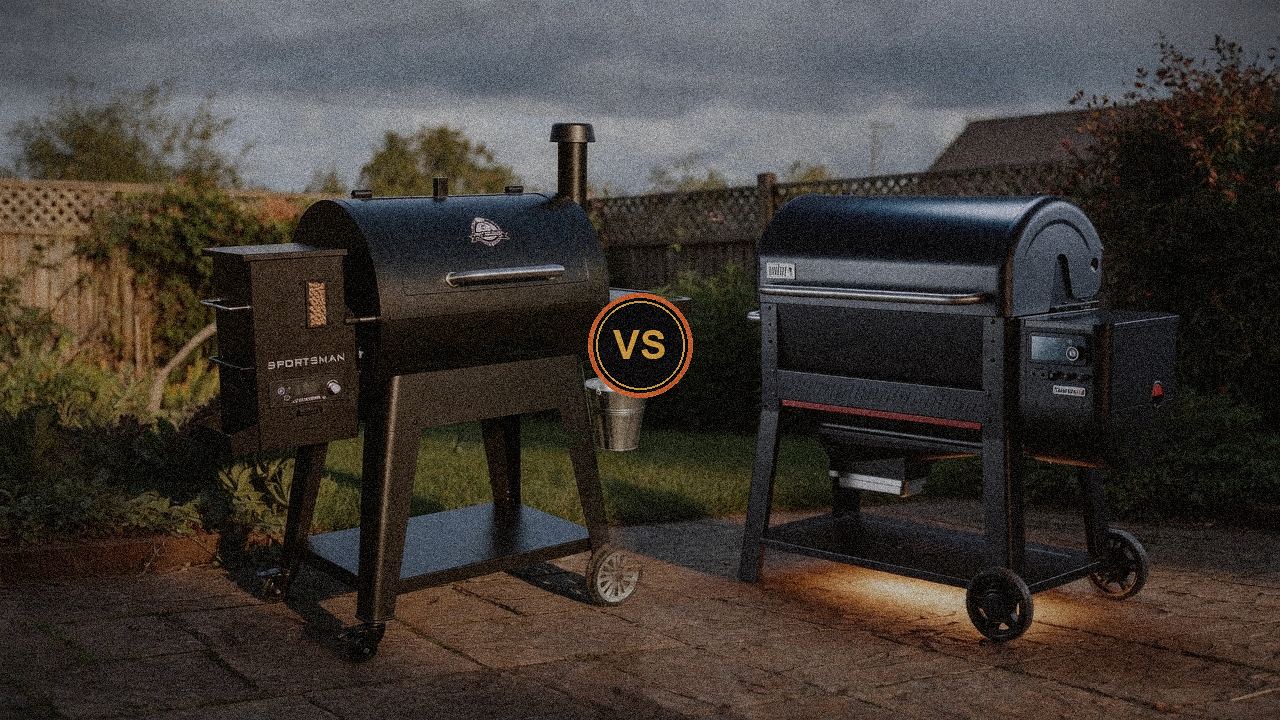
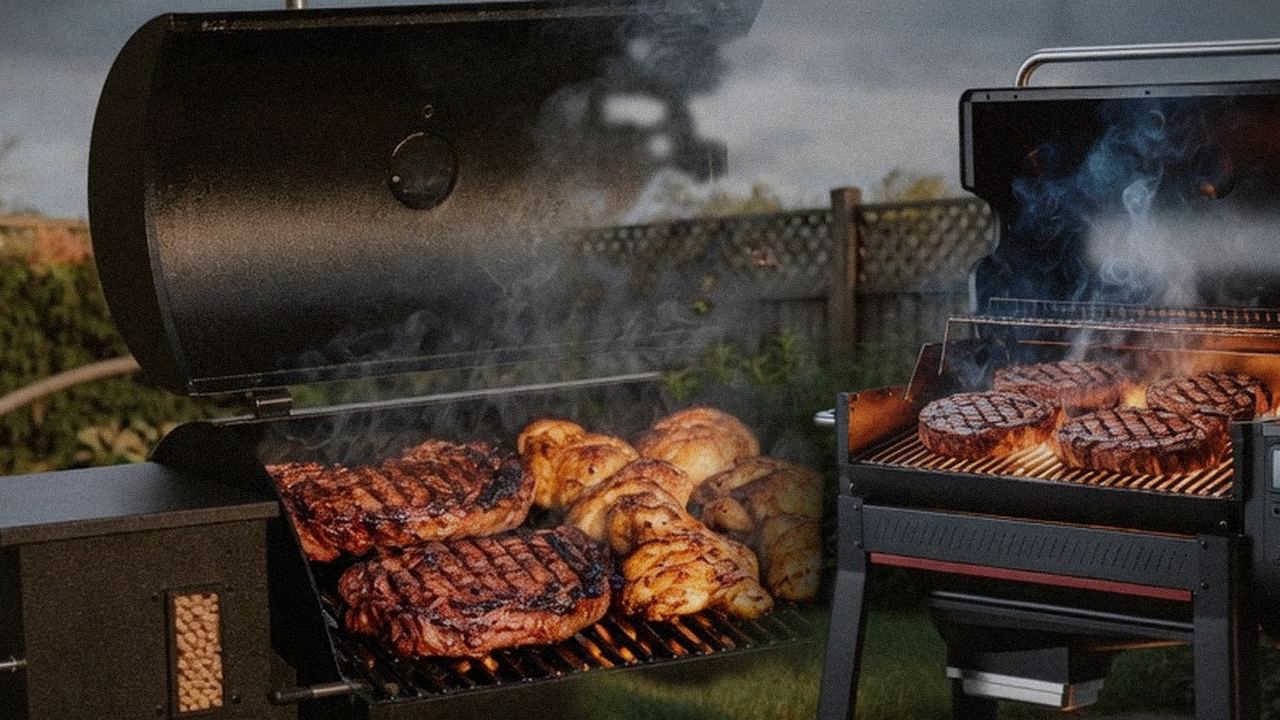
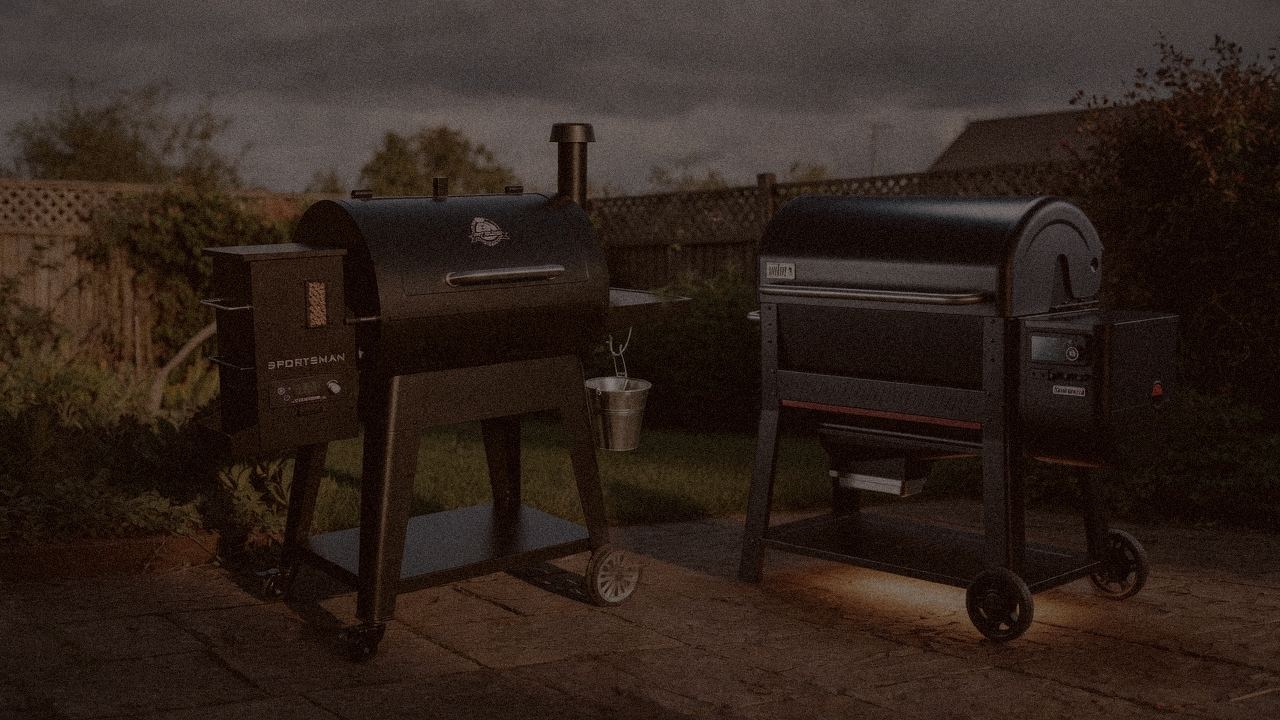
The Pit Boss Sportsman spent most of June parked next to my Weber Searwood 600, close enough that their lids nearly touched when both were open. Same pellets, same pork shoulders, same 6 a.m. starts. The Pit Boss swallowed a bigger cut without crowding, 849 square inches to Weber's 648, and it cost $250 less. Then dinner would end the same way every time: ribeyes moved to the Weber, because one of these grills climbs to 600°F over live flame and the other one stops at 500 and stays there. It is one of the matchups behind the best wood pellet grills rankings on this site.
That is the whole matchup in a patio-sized nutshell. Pit Boss sells you space for grocery-store money. Weber sells you the last hundred degrees and the polish, and charges for both.
Pull temps still follow the USDA safe minimum internal temperatures for poultry, pork, and ground beef, no matter which hopper you bought.
Warranty language is what Weber's support pages actually publishes, not a forum guess.
How do Pit Boss and Weber compare at a glance?
Pit Boss sells bigger grills for less money: the $749 Sportsman carries 849 square inches, more than the $999 Searwood 600's 648. Weber answers with a 600°F ceiling against Pit Boss's 500°F, measured 8-point temp and build scores, and both brands back their grills for the same 5 years.
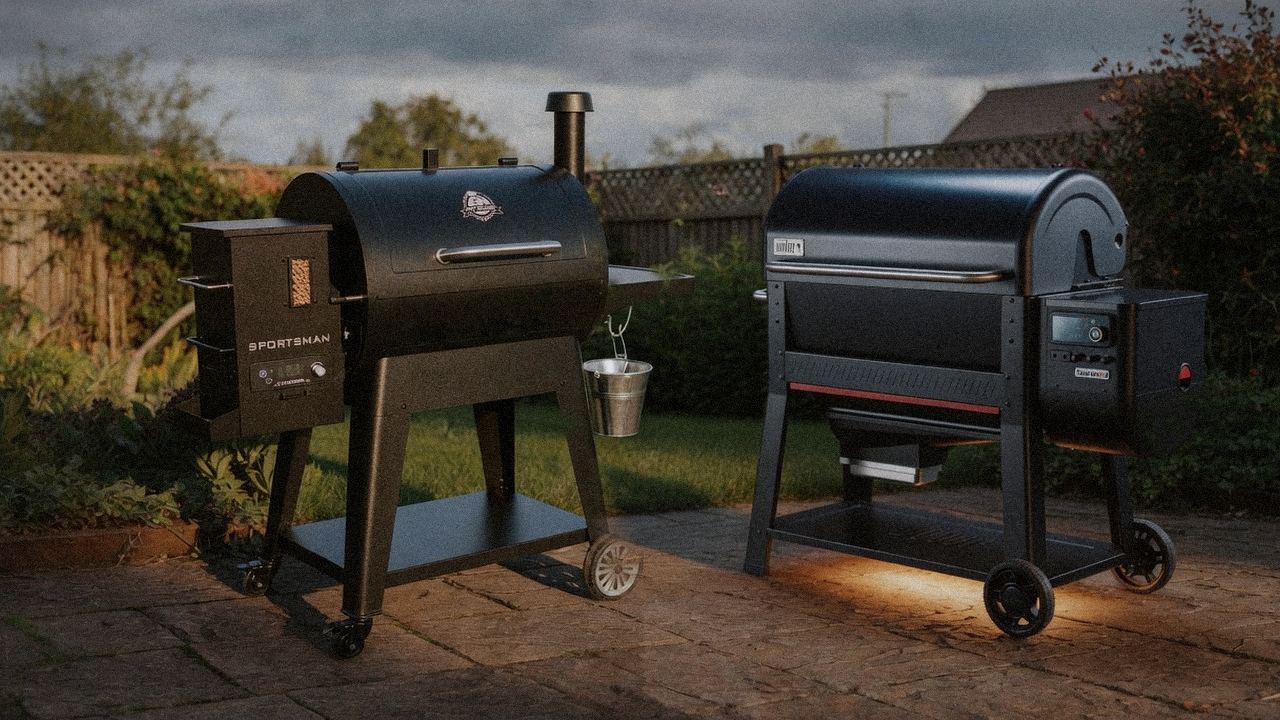
Here are the current machines I would actually cross-shop, straight from the spec sheets:
| Spec | Weber Searwood 600 | Weber Searwood XL 600 | Pit Boss Sportsman | Pit Boss Pro 850 | Pit Boss Pro 1150 |
|---|---|---|---|---|---|
| Price | $999 | $1,299 | $749 | - | - |
| Cooking area | 648 sq in | 972 sq in | 849 sq in | 850 sq in | 1,150 sq in |
| Hopper | 20 lb | 20 lb | 21 lb | 20 lb | 32 lb |
| Max temp | 600°F | 600°F | 500°F | 500°F | 500°F |
| WiFi | Yes | Yes | Yes | Yes | Yes |
| Direct sear | Yes | Yes | Yes | Yes | Yes |
| Warranty | 5 yr | 5 yr | 5 yr | 5 yr | 5 yr |
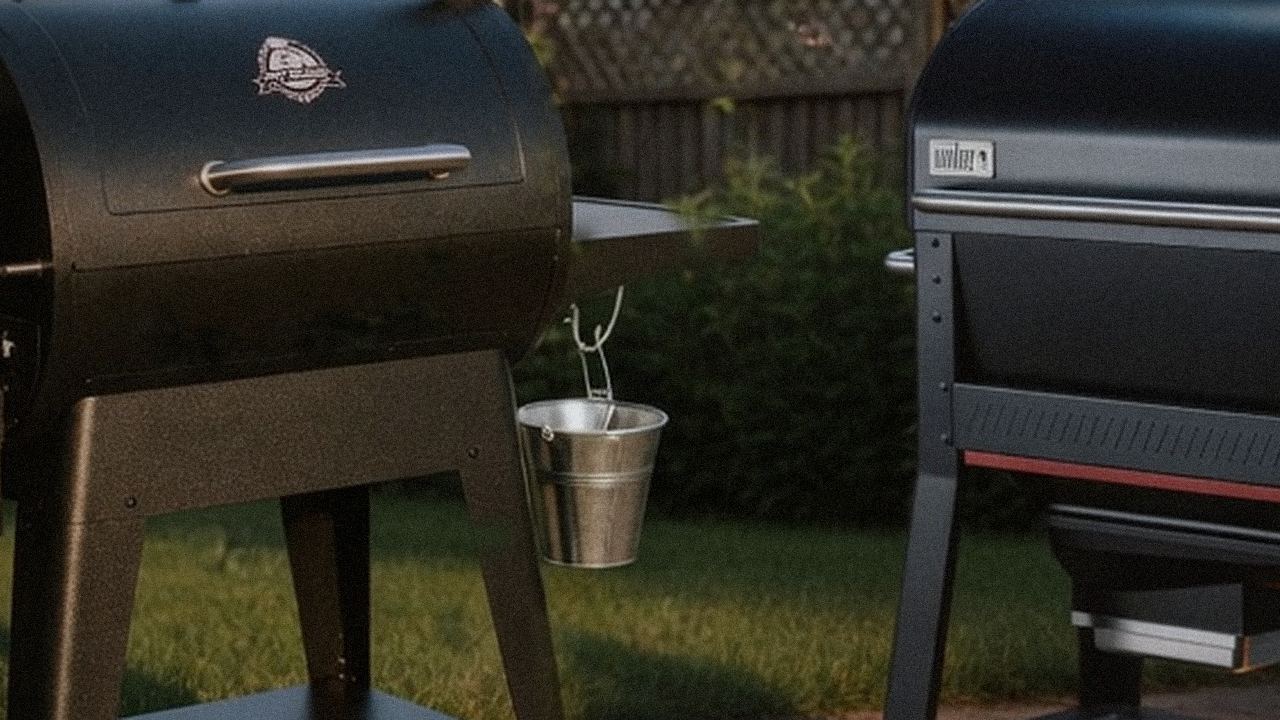
Notice what did not make a column: a warranty gap. Pit Boss matches Weber's five years, which surprises people who assume budget means abandoned. Pit Boss also fields the Navigator 850 at 905 square inches, and the whole lineup runs WiFi now. Weber's entire pellet catalog is two grills. Pit Boss's catalog is a wall at the hardware store.
Which one sears a steak better?
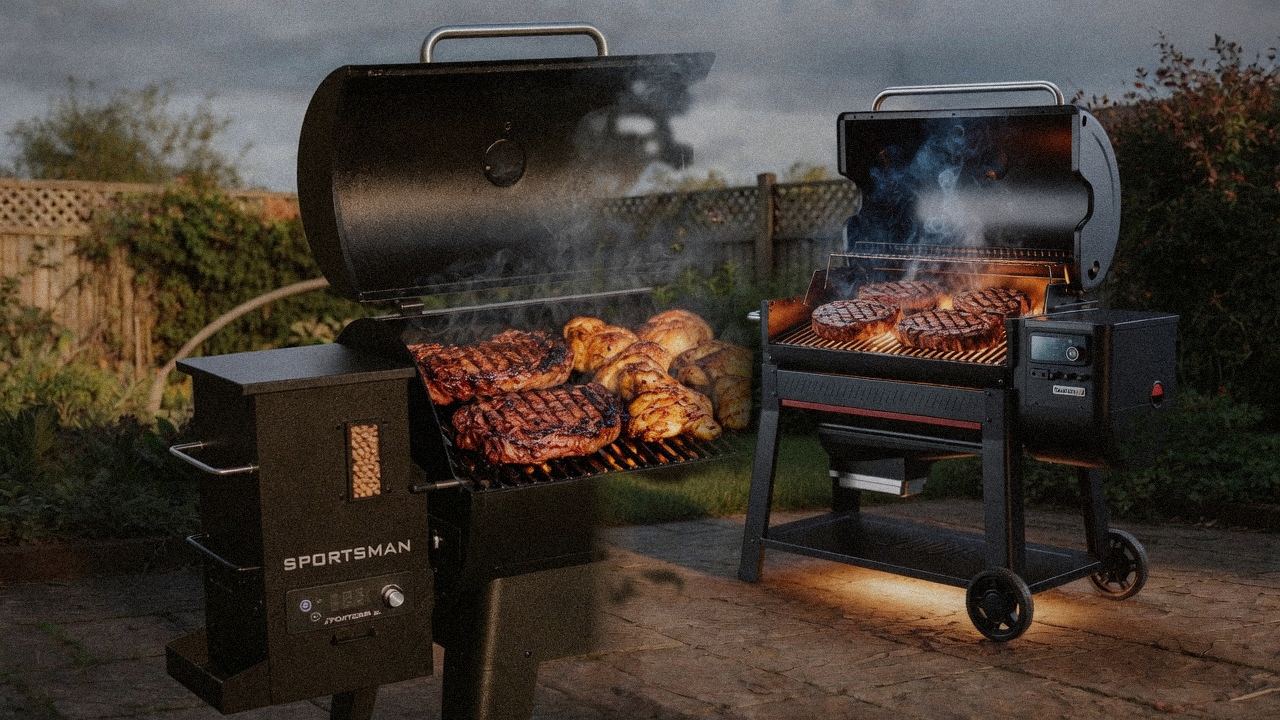
Weber, on measurement and on my plate. Both brands slide a plate away from the burn pot for direct-flame searing, but the Searwoods do it at 600°F and earned an 8.3 sear score in my testing. Every current Pit Boss here caps at 500°F, and I have not put instrumented scores on them yet.
Credit where due: Pit Boss put direct flame in cheap pellet grills before it was fashionable, and every model in that table has it. A pellet grill is a wood-burning convection oven at heart, so a slide-open flame panel is the difference between browned and crusted on either brand. The gap is the ceiling and the behavior on the way up. The Searwood climbs to 600°F and holds its composure there, and the 8.3 I logged came from ribeyes, smash burgers, and thick pork chops, not from a brochure. On the Sportsman I get real flame and a 100-degree-lower ceiling, and the difference shows in how long a crust takes and how much gray band creeps in while you wait.
This is a big part of why a Searwood sits at the top of our pellet grill rankings, and why the smaller one is the machine I point most people to in this matchup. If the sear argument is what decides you, check the current price on the Searwood 600 before you commit either way.
Which holds temperature better?
The Searwoods score 8 on both temperature accuracy and stability against my probes. I have not run the current Pit Boss models through the same instrumented protocol, so no Pit Boss number goes beside them. The one Pit Boss with a complaint on file, the discontinued Competition 1250, drew owner reports of huge temp swings.
Here is everything I have measured on the Weber side, printed as-is:
| Dimension (0-10) | Searwood 600 | Searwood XL 600 |
|---|---|---|
| Temp accuracy | 8 | 8 |
| Temp stability | 8 | 8 |
| Smoke flavor | 7.3 | 7.3 |
| Build quality | 8 | 8 |
| Sear | 8.3 | 8.3 |
| Ease of use | 8.7 | 8.7 |
| Cleaning | 7.3 | 7.3 |
| App | 8.7 | 8.7 |
| Value | 8.7 | 8 |
| Overall score | 7.9 | 7.9 |
Two identical grills in two sizes, basically, with the smaller one taking the higher value score for obvious reasons. The honest asterisk on Weber's column is history: the discontinued SmokeFire line scored 6.8 overall with 6.5s on accuracy and stability, and the Searwood is the redemption arc, not the first draft. The honest asterisk on Pit Boss's blank column is that blank is not a zero. My cooks on the Sportsman have been steady enough to trust with a brisket. What I cannot do yet is print a number I have not measured, and I would rather show you a gap than invent a score.
What do owners actually complain about?
Weber's complaint log is specific and documented: ash blowback into food at high heat, E10 error codes, auger and reset trouble after power loss, and cold-weather pellet flow hiccups. For current Pit Boss models my file has no complaint list on record; the loudest Pit Boss gripe, wild temp swings, belongs to the discontinued Competition 1250.
The Weber list, from BBQGuys threads and Reddit owner forums:
- Ash blowback into food, worst when you run the grill hard at high heat
- E10 error codes, with occasional reset difficulties after a power loss
- Auger motor complaints in the same post-power-loss scenarios
- Pellet flow issues in cold weather, noted repeatedly in owner forums
- Tables and accessories all sold separately, on top of an already higher price
None of these has cost me a cook, but they are real patterns, not one-off reviews, and you should know them before spending $999. On the Pit Boss side, the record is quieter partly because the problem children left the building: the Austin XL gave way to the Pro 850 and the swing-prone Competition 1250 gave way to the Pro 1150. A quiet file is not a clean bill of health, and I will keep logging as my Pit Boss testing catches up. It is the same discipline I hold Weber's other challengers to in recteq vs Weber.
What does the value math say?
Pit Boss wins the value column and it is a blowout. The Sportsman costs $0.88 per square inch; the Searwood XL runs $1.34 and the Searwood 600 hits $1.54, nearly double. With identical 5-year warranties on both sides, Weber cannot claim you are paying extra for coverage. You are paying for heat and refinement.
Computed straight from the numbers above, nothing adjusted:
| Model | Price | Area | $ per sq in | Warranty | Price per warranty year |
|---|---|---|---|---|---|
| Pit Boss Sportsman | $749 | 849 sq in | $0.88 | 5 yr | $150 |
| Weber Searwood XL 600 | $1,299 | 972 sq in | $1.34 | 5 yr | $260 |
| Weber Searwood 600 | $999 | 648 sq in | $1.54 | 5 yr | $200 |
| Pit Boss Pro 1150 | - | 1,150 sq in | - | 5 yr | - |
That first row is the entire Pit Boss sales pitch in arithmetic. Nothing Weber makes gets close, and the Pro 1150's 1,150 square inches and 32-pound hopper push the space argument even further for overnight cooks, where Weber's 20-pound hoppers mean a refill alarm. What the table cannot show is where the extra Weber dollars go: the 600°F ceiling, the measured 8s across temp and build, and an 8.7 app with no subscription attached. Whether that is worth roughly 50 to 75 percent more per square inch is the real question of this page.
Which should a first-timer buy?
If the budget is real and $749 is the number, buy the Sportsman and feel good about it. You get 849 square inches, a 21-pound hopper, WiFi, direct flame, and the same five years of coverage Weber offers, from the brand that practically invented the budget pellet grill. A first-timer learning bark and wrap timing will not hit the Sportsman's limits for a year, and the money saved buys a lot of brisket to practice on. This is the same honest logic that makes Pit Boss dangerous to premium brands generally, which is a fight I covered in Traeger vs Pit Boss.
If you can stretch to $999, my answer changes, and it changes because of what first grills teach you. Almost everyone discovers steak night matters more than they planned. The Searwood 600 smokes just as gently on Saturday, then gives you 600°F and open flame on Tuesday, and its 8.7 ease-of-use score is not an abstraction: it starts fast, holds its number, and never makes you consult a forum. It is the rare first grill you do not outgrow.
Who should spend the extra $250?
Anyone who already knows they cook hot as often as low. The jump from Sportsman to Searwood 600 buys a measured machine: 8s on temp accuracy, stability, and build, the 8.3 sear, and the best app score I have handed out at 8.7, with no subscription creep. It costs you 200 square inches of room, which is the part people underweight. If you feed eight people every weekend, that tradeoff hurts, and honestly the Pro 1150 or the $1,299 Searwood XL becomes the better conversation.
Skip the upgrade if your cooking is 90 percent low-and-slow. At 250°F the two brands are far closer than the price gap suggests, and the Weber advantages you paid for sit mostly unused above 500°F.
Verdict: Pit Boss or Weber?
Weber wins this matchup on the cooking, and it is the brand this site backs overall. The Searwood 600 carries measured 8s where Pit Boss carries blanks, sears at 600°F over live flame, runs the best app I have scored, and takes a 7.9 overall with an 8.7 for value even at $999. Weber earned that position the hard way, digging out of the SmokeFire era, and the Searwood took the top of our rankings against stronger competition than this, including the fight in Weber vs Traeger.
Pit Boss loses the matchup and wins a different argument: it is the best space-per-dollar buy in the category, at $0.88 per square inch against Weber's $1.34 and up, with the same five-year warranty and direct flame included. If your budget stops at $800, or your crowd needs the Pro 1150's acreage, Pit Boss is not a compromise. It is the correct answer to a different question.
My June ended with pork from the Pit Boss and steaks from the Weber, and nobody at the table complained about either. Only one of those grills would I buy twice.
Is Pit Boss better than Weber?
Not on cooking performance. The Weber Searwood line reaches 600°F, sears over direct flame with an 8.3 score, and posts a 7.9 overall in our testing, while current Pit Boss models cap at 500°F. Pit Boss is better on price per square inch: the $749 Sportsman costs $0.88 per square inch versus $1.34 and up for Weber.
Do Pit Boss grills last as long as Webers?
Both brands back their pellet grills with the same 5-year warranty, so on paper the coverage is identical. Weber's Searwoods score 8 on build quality in our testing; we have not scored current Pit Boss builds yet. The discontinued Pit Boss Competition 1250 drew owner reports of huge temp swings before being replaced by the Pro 1150.
Can a Pit Boss sear a steak?
Yes. Every current Pit Boss in this comparison has direct-flame searing through a slide plate over the burn pot, capped at 500°F. The Weber Searwoods do the same thing with an extra 100 degrees of ceiling at 600°F, which builds crust faster, and they carry a measured 8.3 sear score.
What replaced the Pit Boss Austin XL and Competition 1250?
Both are discontinued. The Austin XL, 1,005 square inches with no WiFi, was replaced by the WiFi-equipped Pro Series 850. The Competition Series 1250, which owners reported for large temperature swings, was replaced by the Pro Series 1150 with 1,150 square inches and a 32-pound hopper.
Is the Weber Searwood worth the extra money over a Pit Boss?
If you sear often or want measured reliability, yes. The $999 Searwood 600 brings a 600°F ceiling, 8-point temperature scores, and an 8.7 app with no subscription, and it holds a 7.9 overall score. If you mostly smoke low and slow and need space, the $749 Sportsman's 849 square inches is the smarter buy.