Pit Boss vs Z Grills: The Budget Pellet Grill Battle, Settled on My Patio
Pit Boss vs Z Grills after cooking on both: searing, temperature scores, warranties, and the value math that decides which budget pellet grill to buy.
 By Oleg Galeev, cooking on pellet grills since 2020, runs the OleGrill YouTube channel
Short answer
Pit Boss wins the budget battle: direct-flame searing to 500°F, bigger cooking areas, WiFi, and a 5 year warranty against Z Grills' 3. Buy Z Grills when the last dollar matters and you only smoke low and slow; the 700 Series holds temperature honestly and scored 9/10 on value in my testing.
Live prices. Affiliate links: we may earn a commission at no extra cost to you. How this works.
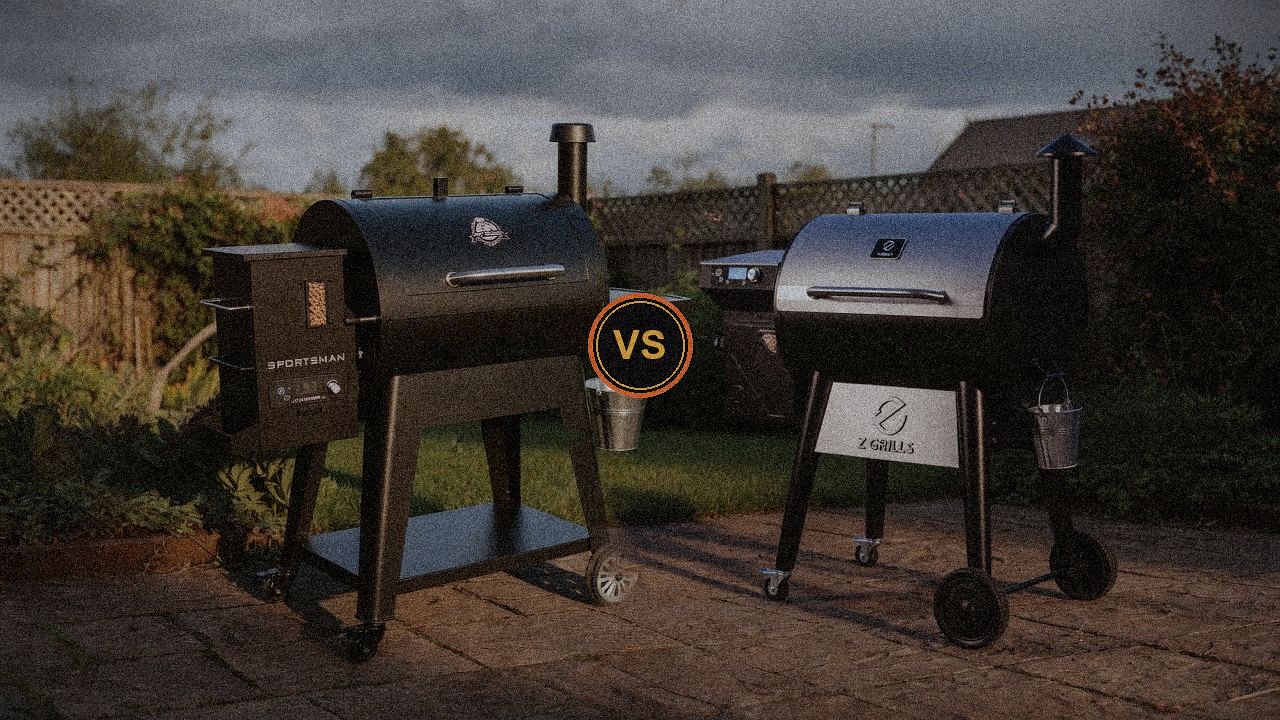
The slide handle on my Pit Boss Pro 850 makes a scrape you can feel in your teeth, and the second that plate opens, orange flame jumps at the grates. Three feet away, the Z Grills 700 was doing what it always does: humming along at smoking temperature, minding its own business, asking nothing of me. I ran both brands through the same week of cooking, ribs on one and chops on the other, then swapped, and the personality gap showed up before the first bark set. It is one of the matchups behind the best wood pellet grills rankings on this site.
These are the two brands almost everyone cross-shops at the bottom of the pellet market, and they are not building the same machine.
Pull temps still follow the USDA safe minimum internal temperatures for poultry, pork, and ground beef, no matter which hopper you bought.
Warranty language is what Pit Boss's warranty page actually publishes, not a forum guess.
What separates Pit Boss and Z Grills on paper?
Pit Boss gives you more metal for the money: 849 to 1,150 square inches, 500°F ceilings, direct-flame searing, WiFi, and 5 year warranties across the current lineup. Z Grills counters with lighter, simpler machines, a 450°F ceiling, no WiFi, 3 year coverage, and the strongest value scores I have recorded in this price class.
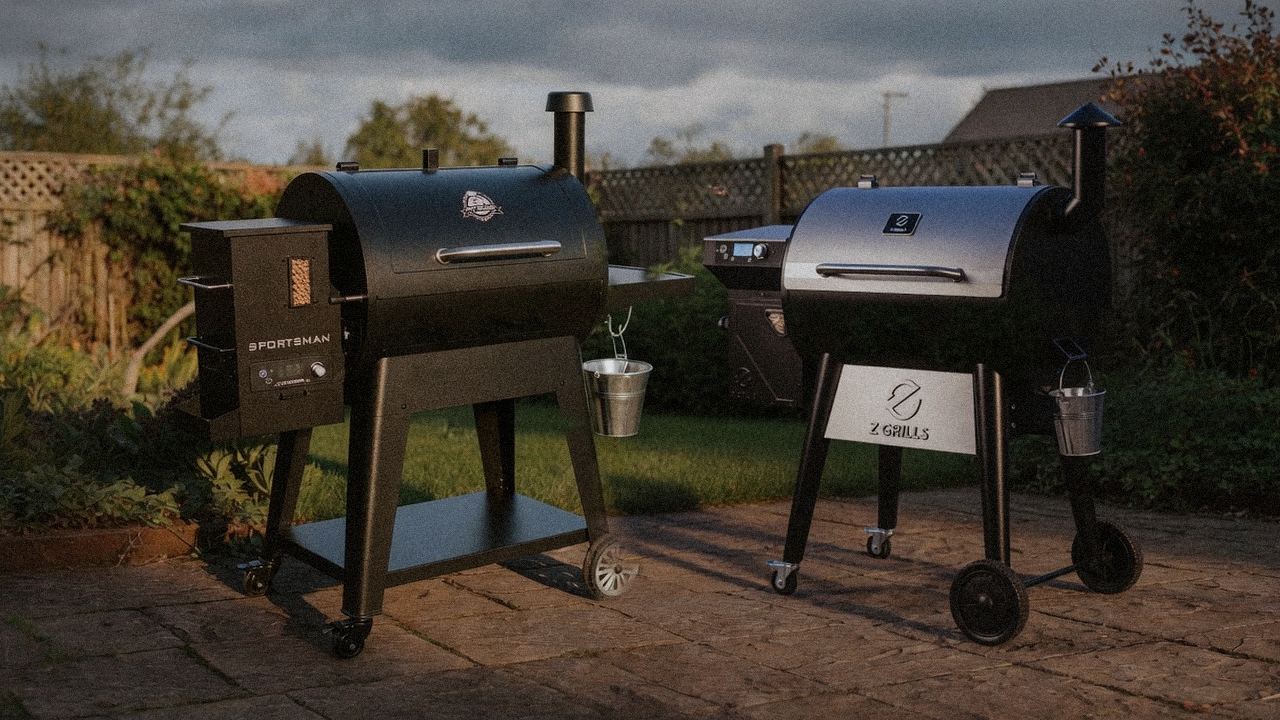
Here are the four current models I keep on hand from these two brands, side by side. A dash means the number is not in my verified data, and I will not guess at it.
| Spec | Pit Boss Pro 850 | Pit Boss Sportsman | Z Grills 700 | Z Grills 450A |
|---|---|---|---|---|
| Price on file | n/a | $749 | n/a | n/a |
| Cooking area | 850 sq in | 849 sq in | 697 sq in | 459 sq in |
| Hopper | 20 lb | 21 lb | n/a | 15 lb |
| Max temp | 500°F | 500°F | 450°F | 450°F |
| WiFi | Yes | Yes | No | No |
| Direct-flame sear | Yes | Yes | No | No |
| Warranty | 5 years | 5 years | 3 years | 3 years |
Read the bottom four rows again. Temperature ceiling, WiFi, searing, warranty: Pit Boss sweeps all four on every current model, and the range keeps climbing through the 905 square inch Navigator 850 up to the Pro 1150 with its 32 pound hopper. Z Grills' whole answer is price and simplicity, which sounds thin until the value scores show up later in this article.
Which one sears better?
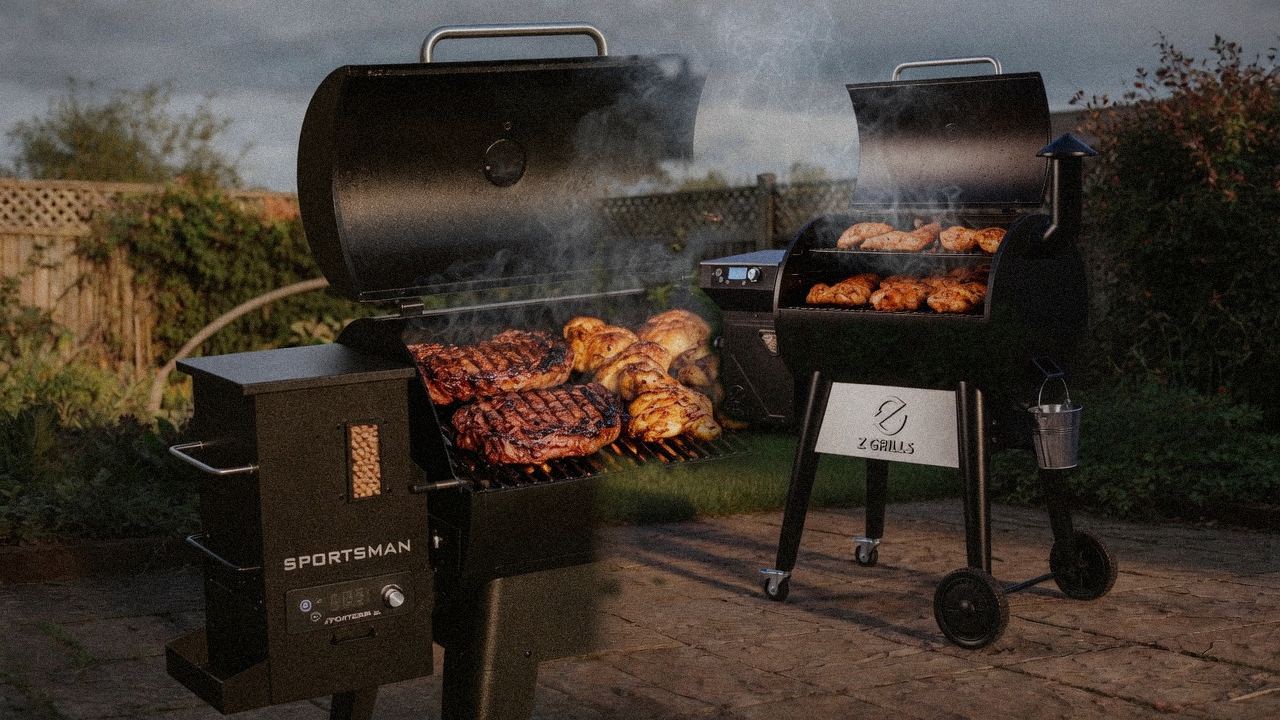
Pit Boss, and it is not close. Every current Pit Boss here opens a direct-flame broiler and reaches 500°F, while both Z Grills top out at 450°F with no sear plate and posted just 5.5/10 in my searing tests. If steak crust matters to you, this one dimension decides the whole matchup.
The slide-plate broiler is Pit Boss's signature move. Pull the handle, the deflector opens, and the meat sits over live flame instead of convected heat, so a ribeye on my Pro 850 gets real crust while a Z Grill is still thinking about it. The Z Grills 700 and 450A have no equivalent hardware, and 450°F of indirect heat is a hard ceiling for browning. My workaround on the Z is a preheated cast iron pan, which works, but then the grill is just an oven under a skillet. Both Z models carry the same 5.5/10 sear score in my logs: the same missing feature, showing up twice. Camp Chef runs the direct-flame play too, at a higher price, and I break that fight down in Pit Boss vs Camp Chef.
Which holds temperature better?
On my protocol the Z Grills 700 and 450A both score 7.5/10 for temperature accuracy and 7.5/10 for stability, honest numbers at this price. I have not scored the current Pit Boss Pro models on the same rig yet, and the infamous swing complaints trace to a discontinued model, not these.
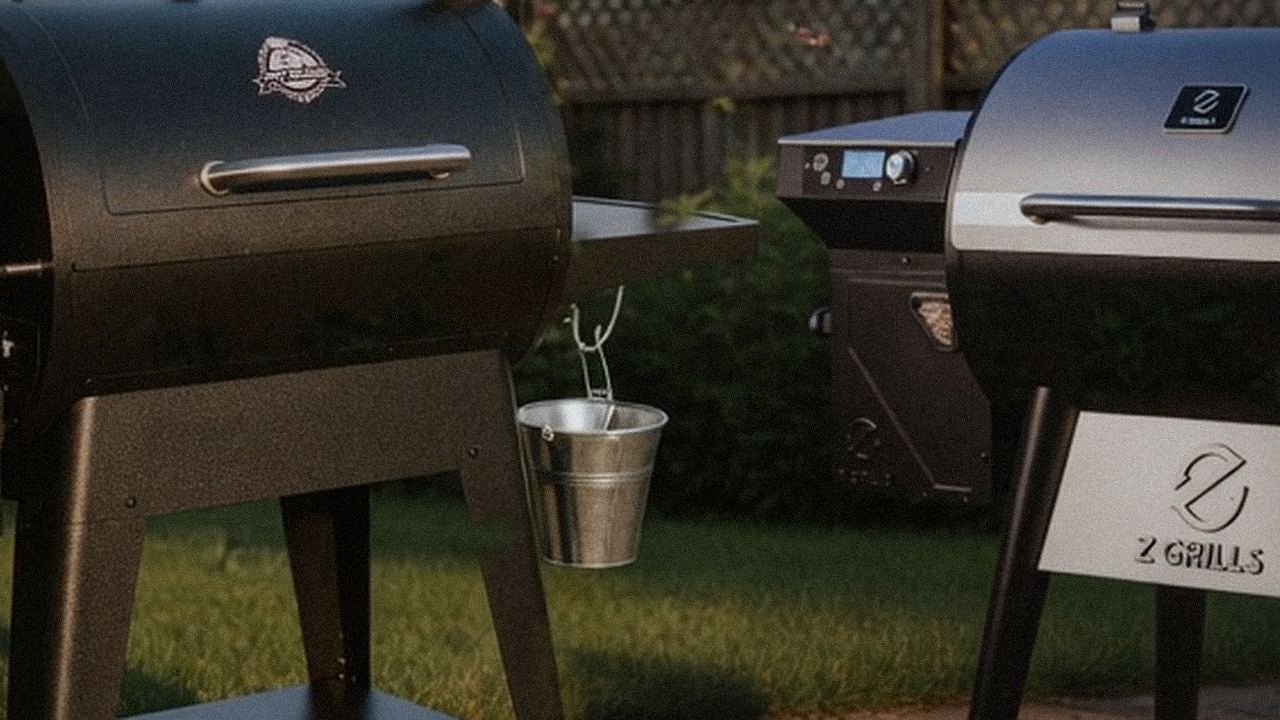
A 7.5 on my scale means the grill wanders within a range I would happily smoke a brisket in, and both Z models earned it with logged probes over full cooks, the method described on the how we test page.
Pit Boss carries baggage here that it no longer deserves. The complaint repeated in owner forums, huge temperature swings, attaches to the Competition Series 1250, a 1,315 square inch model Pit Boss discontinued and replaced with the Pro 1150. I cooked on the 1250 and I will not defend it. The current Pro Series has not been through my full instrumented protocol yet, so no score gets printed, but nothing in my daily cooking on the Pro 850 has repeated the 1250's behavior.
Who makes more smoke?
The Z Grills 700 posts a 7.5/10 smoke score and the 450A a 7/10, respectable wood flavor from budget machines running plain hardwood pellets. Current Pit Boss models have not been through my smoke scoring yet, so I will not print a number, but their bigger barrels take smoke well in daily cooking.
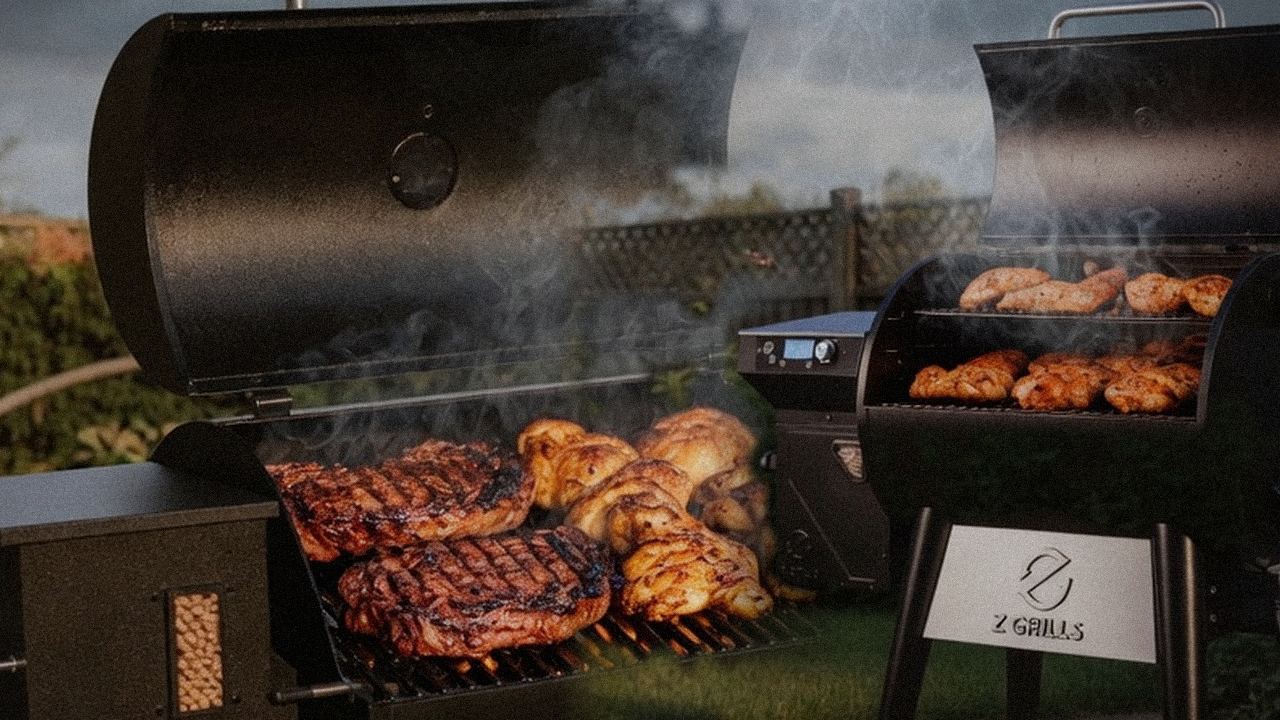
Every grill in this article makes smoke the same way: an auger feeds compressed hardwood pellets into a firepot, and a fan drives the fire, the design summarized on Wikipedia's pellet grill page. At smoking temperatures the differences between brands narrow, because the fire is small and lazy no matter whose logo is on the hopper.
| Model | Smoke score | Ease of use | Cleaning | Efficiency |
|---|---|---|---|---|
| Z Grills 700 | 7.5/10 | 8/10 | 7/10 | 7/10 |
| Z Grills 450A | 7/10 | 8.5/10 | 7/10 | 7/10 |
That ease-of-use column is Z Grills' quiet win. There is no app to pair, no firmware to update, one dial and a probe port. My mother-in-law could run the 450A on her second try, and that is the whole pitch.
Which is built to last?
Pit Boss backs every current model with a 5 year warranty against Z Grills' 3, and the gap mirrors the hardware. Both Z models scored 6.5/10 on build in my testing, with thin metal the standing community complaint. Neither brand is heirloom steel, but Pit Boss carries more of it.
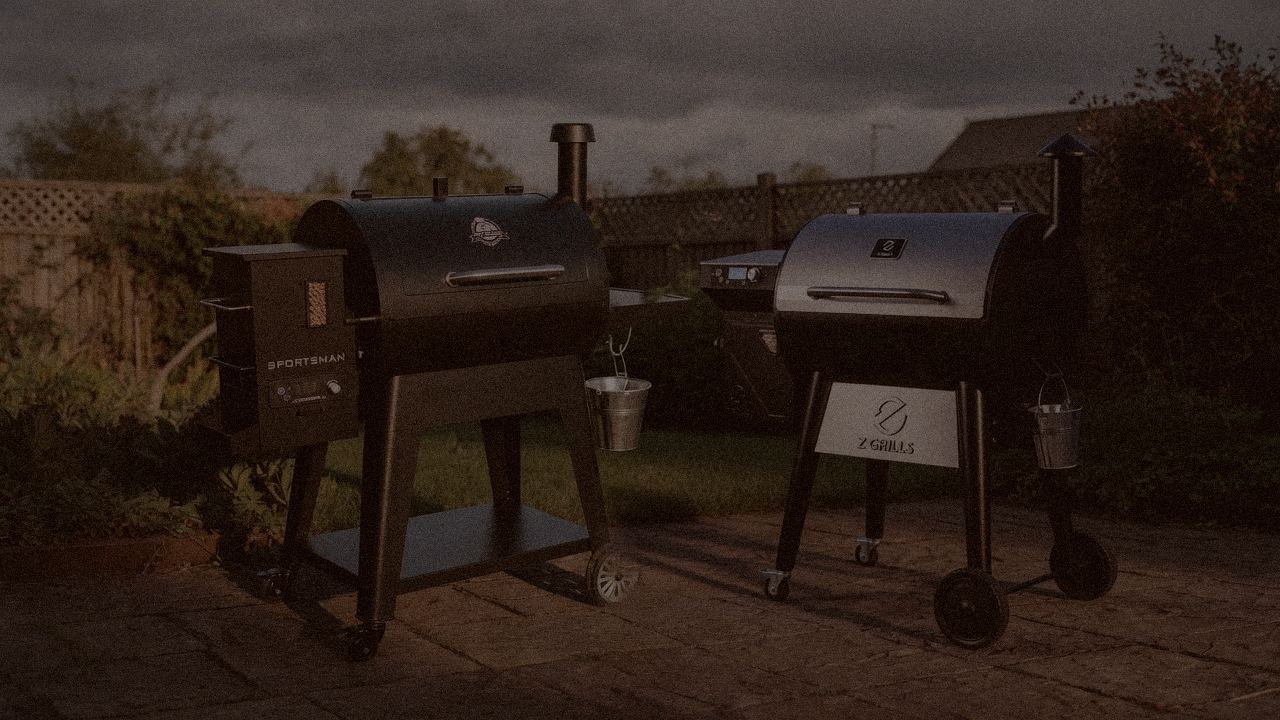
Lift the lid on each and you feel the difference before you read a spec. The Z Grills panels flex where the Pit Boss barrel does not, and that thin-metal note is not just mine, it recurs across Z Grills owner communities. Thinner steel also sheds heat faster in wind, which is part of why I keep a welding blanket near the Z in winter.
The warranty math is the cleanest tiebreaker. Five years of coverage on a grill in this price class is unusual, and Pit Boss puts it on everything current, from the Sportsman to the Pro 1150. Three years from Z Grills is fair, not generous. Long-term owner data on the 450A specifically is still limited, so I treat its durability as unproven rather than bad.
What do owners complain about?
Z Grills owners report controller and auger hiccups in older threads, occasional auger smoke or overheat shutdowns, and thin panels. Pit Boss's loudest complaint, wild temperature swings, sits on the discontinued Competition 1250. On the 450A, the 15 pound hopper runs tight on overnight cooks.
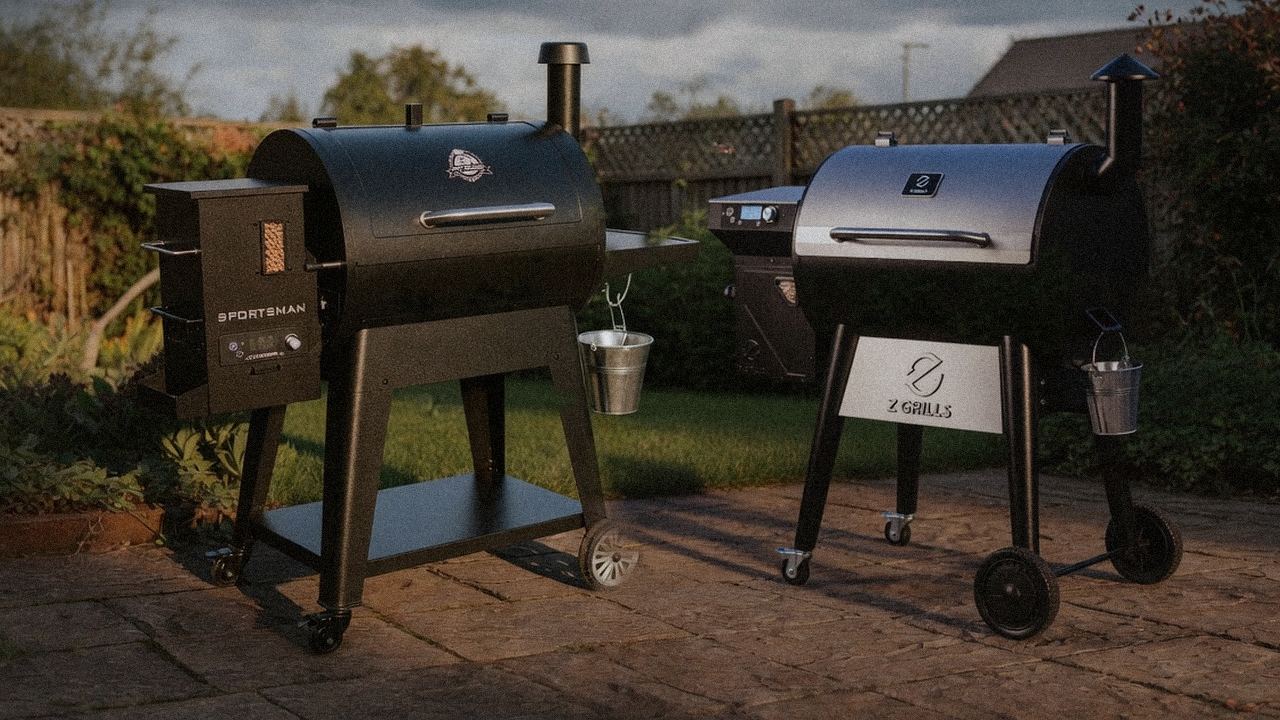
The pattern matters more than any single gripe. Z Grills complaints are small-part complaints: controllers, augers, sheet metal. Pit Boss's worst was a behavior problem on one model, and the company killed that model. Neither brand shows the kind of systemic failures that would make me warn you off entirely.
Which gives you more grill for your money?
Using the only verified price in my data, the Pit Boss Sportsman works out to $0.88 per square inch with 5 years of coverage, about $150 per warranty year. Z Grills street prices move too often to print here, but the 700 Series' 9/10 value score tells you where it lands.
Here is the value math from numbers I can stand behind, including a column I find more telling than raw size: cooking area per year of warranty coverage.
| Model | Cooking area | Warranty | Sq in per warranty year | Verified price |
|---|---|---|---|---|
| Pit Boss Pro 850 | 850 sq in | 5 yr | 170 | n/a |
| Pit Boss Pro 1150 | 1,150 sq in | 5 yr | 230 | n/a |
| Pit Boss Sportsman | 849 sq in | 5 yr | 170 | $749 |
| Pit Boss Navigator 850 | 905 sq in | 5 yr | 181 | n/a |
| Z Grills 700 | 697 sq in | 3 yr | 232 | n/a |
| Z Grills 450A | 459 sq in | 3 yr | 153 | n/a |
Funny result in that fourth column: the Z Grills 700 and the Pro 1150 land within two points of each other, by opposite routes. One does it with a huge barrel, the other with a short warranty under a decent-sized one. In my scoring the 700 earned a 9/10 on value and the 450A an 8.5, the two highest value marks in this matchup, and that is the honest case for Z Grills in one sentence: you give up features, not fundamentals.
Still, if I could only keep one grill from this article, it is the Pro 850. It sears, it holds 850 square inches, the app works, and the warranty runs five years. For the record, my overall top pick is not in this matchup at all: the Weber Searwood XL leads the full pellet grills ranking, and you can check the current price if your budget has any stretch left in it.
Which one should a first-timer buy?
Z Grills, if the budget is truly fixed. The 450A scored 8.5/10 for ease of use and the 700 an 8, there is no app to fight, and low-and-slow smoking is the whole job description. A first-timer who already daydreams about seared steak should stretch to the Pit Boss instead.
My advice to beginners has not changed in years: your first ten cooks should teach you meat, not menus, and the Z Grills dial-and-go controller keeps the learning curve pointed at the food. Every beginner mistake plays out identically on either brand, so the cheaper seat at the table is a fine place to learn. That same logic is how Z Grills survives contact with Traeger's marketing budget, which I cover in Z Grills vs Traeger. Just know the trade: the day you want a crusted ribeye instead of another rack of ribs, the Z has no answer, and beginners become steak people faster than they expect.
Who should spend the extra money on Pit Boss?
Anyone who grills as much as they smoke. The extra Pit Boss money buys 50°F more ceiling, a direct-flame broiler, WiFi on every current model, hoppers up to 32 pounds, and two more warranty years. That covers weeknight burgers and Saturday searing, not just weekend brisket.
The person I steer to Pit Boss is the one replacing a gas grill, not adding to it. If the pellet grill will be the only cooker on the patio, it has to do burgers on a Tuesday, and 500°F with open flame does that job while 450°F of moving air does not. Families feeding six should look at the Pro 1150 and stop shopping. And if you are weighing Pit Boss against the brand everyone knows, the calculus shifts again in Traeger vs Pit Boss, where Pit Boss plays the value role that Z Grills plays here.
Verdict: Pit Boss or Z Grills?
Pit Boss wins the budget battle on capability: searing, temperature ceiling, capacity, WiFi, and warranty. Z Grills wins on entry price and simplicity, and the 700 Series' 9/10 value score is real. Buy Pit Boss if you ever plan to sear; buy Z Grills if you only smoke and every dollar counts.
This is the value tier's heavyweight fight, and Pit Boss takes it on points, not by knockout. The Pro 850 is the grill I hand most budget shoppers because it refuses to box them in: smoke today, sear next month, five years of paper behind it. The Z Grills 700 is the right buy for a specific, common person, the pure smoker on the tightest budget who wants one dial and honest 7.5-grade temperature control. I still cook on mine. I just reach for the Pit Boss first.
Is Z Grills better than Pit Boss?
No, not overall. Pit Boss offers direct-flame searing, a 500°F max against Z Grills' 450°F, WiFi, and a 5 year warranty against 3. Z Grills is better on entry price and simplicity, and its 700 Series earned my best value score in this matchup at 9/10.
How long do Z Grills pellet grills last?
The 3 year warranty is the only hard number I will stand behind. Owner communities note thin metal on Z Grills, and long-term reports on the 450A are still limited. Kept covered and cleaned, mine keeps running, but I treat Z Grills durability as unproven rather than proven.
Can you sear a steak on a Z Grills grill?
Not properly on the grates. Both the 700 and 450A top out at 450°F with no direct-flame access, and they scored 5.5/10 in my sear testing. A preheated cast iron pan inside the grill gets you real crust; the grill alone gets you gray-brown.
Do Pit Boss grills have WiFi?
Every current Pit Boss in this comparison does: the Pro 850, Pro 1150, Sportsman, and Navigator 850 all connect to the app. Neither Z Grills model here offers WiFi, which is part of how they keep the price down. The discontinued Austin XL was Pit Boss's last non-WiFi holdout.
Which brand makes bigger grills, Pit Boss or Z Grills?
Pit Boss, clearly. Its current lineup here runs 849 to 1,150 square inches, and the discontinued Competition 1250 reached 1,315. Z Grills tops out at 697 square inches on the 700 Series, with the 450A at 459. Pit Boss also fits larger hoppers, up to 32 pounds on the Pro 1150.