Z Grills vs Traeger: I Ran Both Side by Side, Here's Where Your Money Actually Goes
Z Grills vs Traeger compared on real cooks: temperature control, smoke flavor, build quality, WiFi, warranties, and price per square inch. Which brand deserves your money and who should pay for the Traeger polish.
 By Oleg Galeev, cooking on pellet grills since 2020, runs the OleGrill YouTube channel
Short answer
Z Grills wins on value. The 700 Series gives you 697 square inches of pellet cooking for roughly half of what a comparable Traeger costs, from a factory that built grills for other brands before selling direct. Traeger wins WiFi, controller polish, support, and resale. First grill, buy Z Grills. Bigger budget, buy the Traeger.
Live prices. Affiliate links: we may earn a commission at no extra cost to you. How this works.
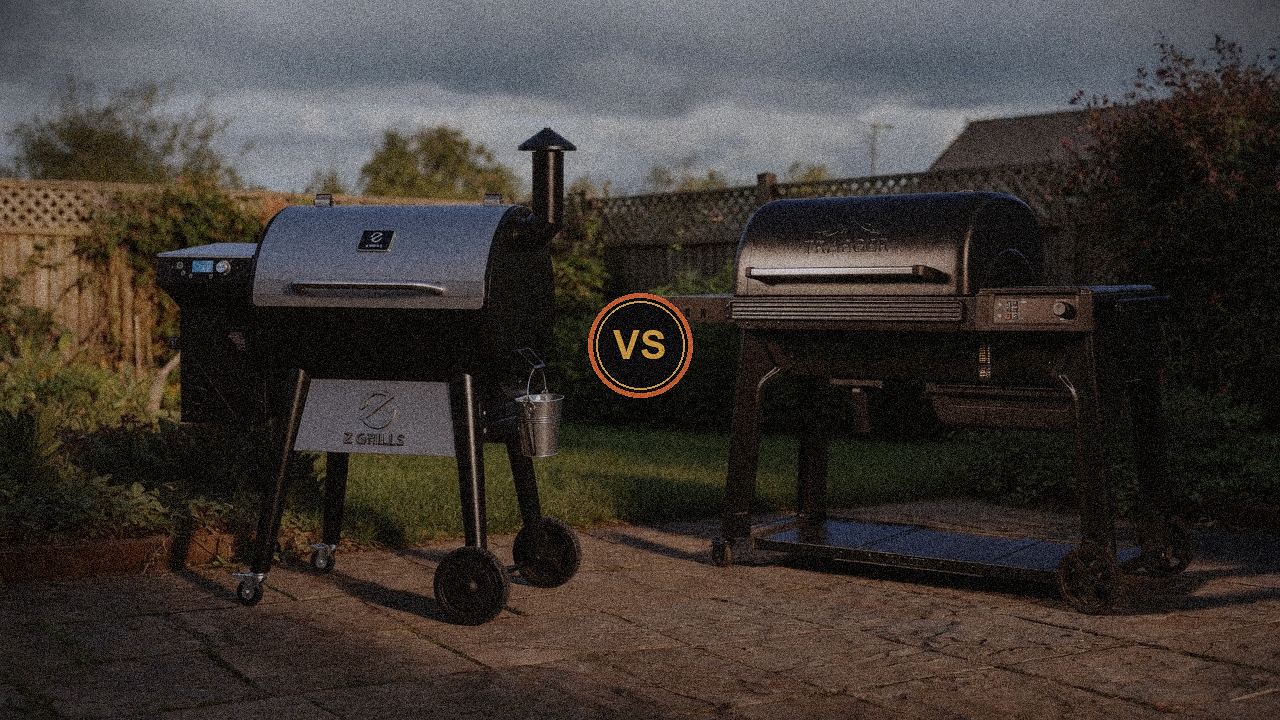
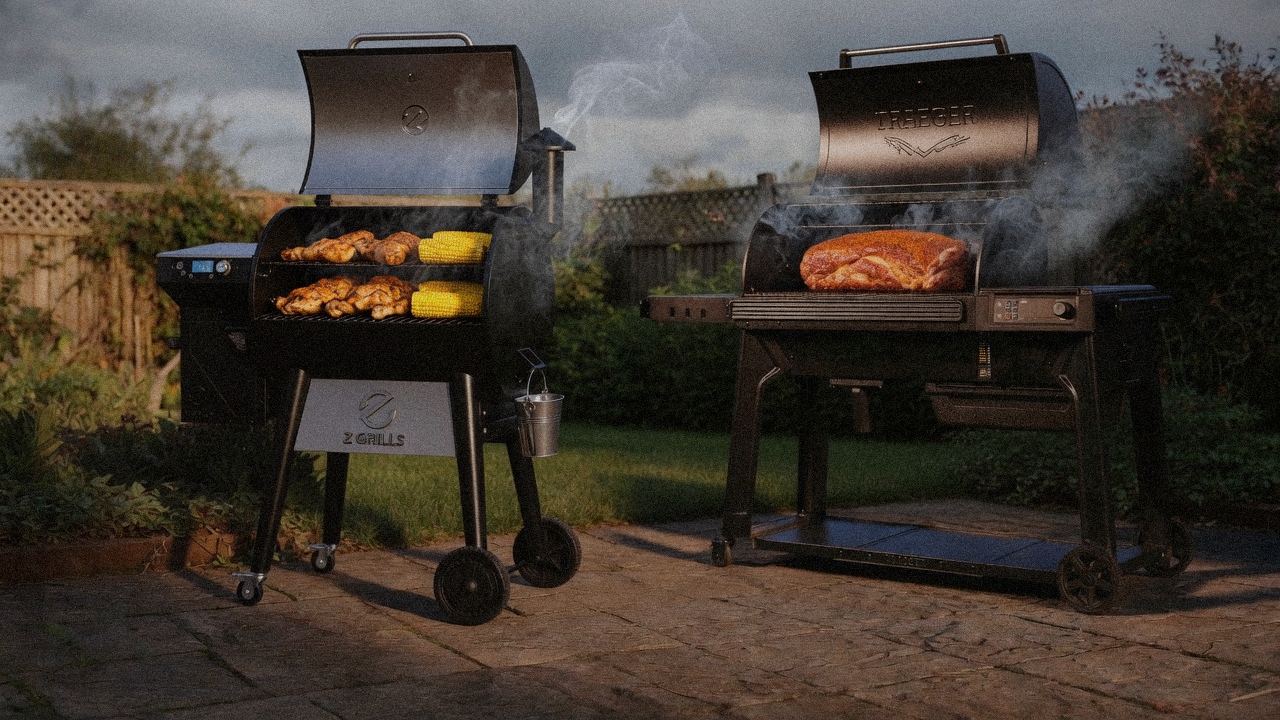
Two pork butts, same weight, same rub, trimmed from the same case. One went on my Z Grills 700, the other on a Traeger Woodridge, and I spent a Saturday walking between them with a notebook and a probe thermometer. By hour three my phone had pinged me twice about the Traeger's pit temp. The Z Grills told me nothing, because it can't, and the meat did not care. That is the whole comparison in one image: one grill talks to you, one just cooks, and the price gap between them buys a year of pellets. It is one of the matchups behind the best wood pellet grills rankings on this site.
Pull temps still follow the USDA safe minimum internal temperatures for poultry, pork, and ground beef, no matter which hopper you bought.
Warranty language is what Traeger's warranty page actually publishes, not a forum guess.
Z Grills vs Traeger at a glance
Z Grills sells more cooking area for less money with a 3-year warranty and no WiFi. Traeger's current lineup costs more, runs hotter at a 500°F ceiling, adds WiFi on everything but the little Tailgater 20, and backs the Woodridge, Ironwood, and Timberline families with 10-year warranties.
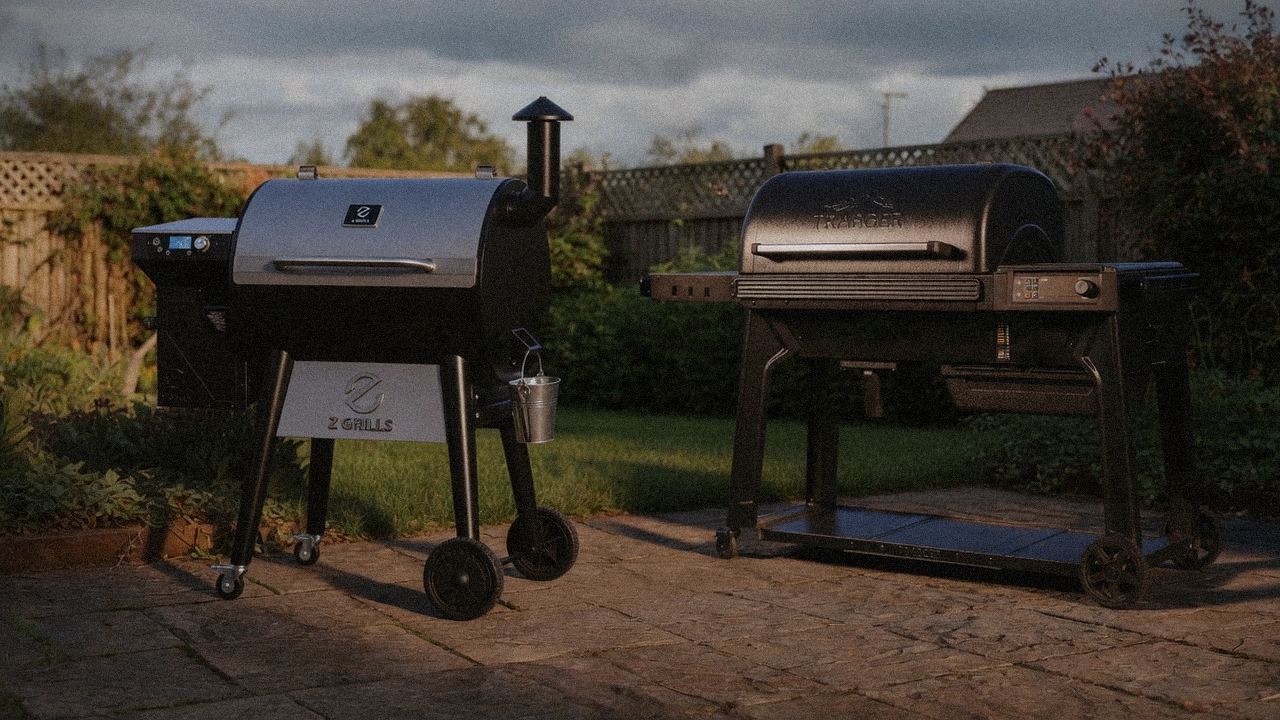
Representative models below, numbers straight from my verified spec sheet. A dash means the figure is not on my sheet; Z Grills street prices swing so often with direct-sale discounts that I keep them off the fixed table entirely.
| Model | Price | Cooking area | Hopper | Max temp | WiFi | Direct sear | Warranty |
|---|---|---|---|---|---|---|---|
| Z Grills 700 Series (ZPG-7002) | n/a | 697 sq in | n/a | 450°F | No | No | 3 yr |
| Z Grills ZPG-450A | n/a | 459 sq in | 15 lb | 450°F | No | No | 3 yr |
| Traeger Woodridge | $900 | 860 sq in | 24 lb | 500°F | Yes | No | 10 yr |
| Traeger Woodridge Pro | $1,178 | 970 sq in | 24 lb | 500°F | Yes | No | 10 yr |
Neither brand gives you a true direct-sear setup in these models; if searing matters most to you, my Weber vs Traeger comparison covers that battle.
Which brand holds temperature better?
Both hold a smoking temperature well enough that your brisket will not notice the difference. My Z Grills 700 scores 7.5 for temp accuracy and 7.5 for stability on our 9-point scale. I have not run the same scored protocol on the current Traegers for this pair, but their newer PID-driven controllers and 500°F ceilings give them the on-paper edge.
The Z Grills numbers below come from logged cooks on my patio, the protocol described on how we test. The Traeger side of this pair has not been through the scored sheet yet, so I argue from verified specs and owner reports instead of inventing scores.
| Z Grills model | Temp accuracy | Temp stability | Ease of use |
|---|---|---|---|
| 700 Series (ZPG-7002) | 7.5 | 7.5 | 8.0 |
| ZPG-450A | 7.5 | 7.5 | 8.5 |
Those are honest mid-pack numbers. The 700 wanders a little in wind and takes its time recovering after a lid open, but it settles back without drama. The spec sheet does say one thing clearly: every current Traeger except the Tailgater 20 tops out at 500°F, while both Z Grills stop at 450°F, and that extra 50 degrees matters for crisping chicken skin. Older Z Grills owner threads also mention occasional controller inconsistencies, exactly where Traeger has spent a decade of refinement money.
Call it even at smoking temps. On ceiling and controller refinement, Traeger.
Who makes more smoke flavor?
Z Grills at least matches Traeger here, and the owner chatter suggests it may quietly win. My 700 Series scores 7.5 for smoke and the 450A scores 7.0. Meanwhile the most common Woodridge Pro complaint I see from owners on Reddit is less smoke flavor than they expected.
This surprises people, because a pellet grill is a pellet grill: auger, fire pot, fan, and a smoke profile that mostly comes down to combustion tuning. Newer controllers burn cleaner, and cleaner combustion means milder smoke. Great for temperature graphs, less great for bark that tastes like a campfire.
The Z Grills 700 is a simpler machine, and on my cooks that simplicity shows up as a slightly heavier smoke ring at 225°F. Neither brand will match a stick burner. But if smoke flavor is your reason for going pellet in the first place, the budget grill is not the compromise in this category. Pit Boss plays the same card even harder, which I unpack in Pit Boss vs Z Grills.
Winner: Z Grills, by a nose, with the caveat that the Traeger side is owner-report data rather than my scored protocol.
Which is built to last?
Traeger, and it is not close. The build score on my Z Grills 700 is 6.5, with thin metal the most repeated community complaint, and Z Grills backs it for 3 years. Traeger's Woodridge, Ironwood, and Timberline lines all carry 10-year warranties, which tells you what each company expects to survive.
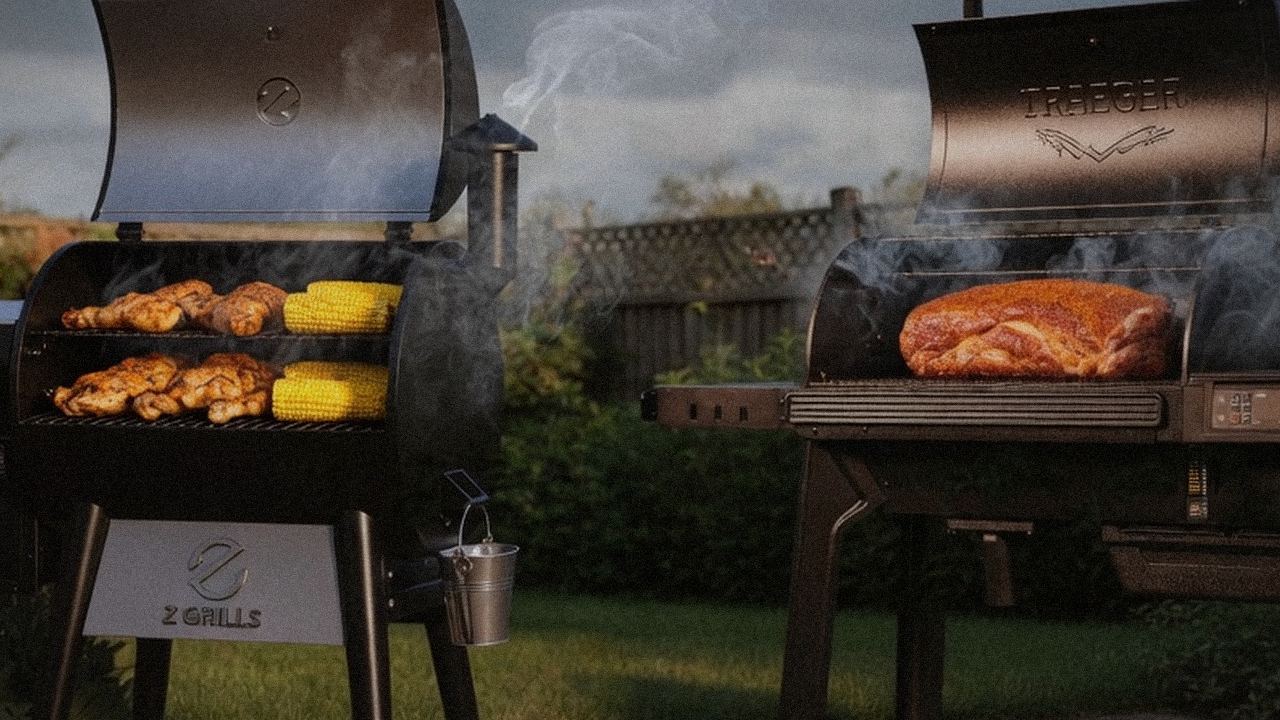
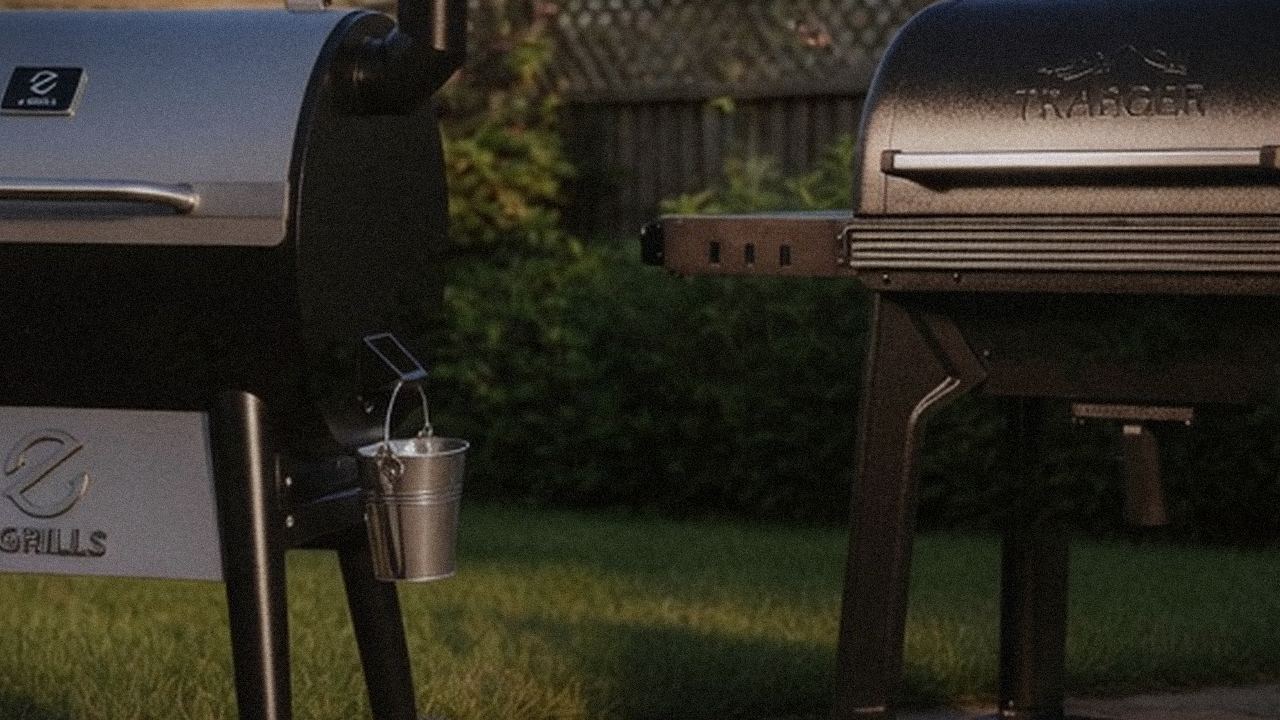
Put your hand on both lids and you feel the difference before you cook anything. The Z Grills 700 is functional steel, thinner gauge, and the community threads say the same thing my knuckle-rap test does. It is not fragile, mine has held up fine under a cover, but it is built to a price. Some owners also report smoke leaking from the auger tube or overheat shutdowns, the kind of gremlin a longer warranty would take the sting out of.
That is the real problem: the warranty gap runs the wrong direction. The brand with the thinner metal covers you for 3 years, the brand with the heavier build for 10. Traeger also has a support and parts network a direct-import brand cannot match, and Traegers hold resale value in a way Z Grills do not. Over a decade of ownership, that column of the table is worth real money.
Winner: Traeger, decisively.
How much does the missing WiFi actually matter?
Less than Traeger's marketing says and more than Z Grills owners admit. Neither Z Grills model has WiFi. Every current Traeger except the 300-square-inch Tailgater 20 has it, and after a season of pinged alerts and remote temp changes, going back to walking outside in the rain feels like a downgrade.
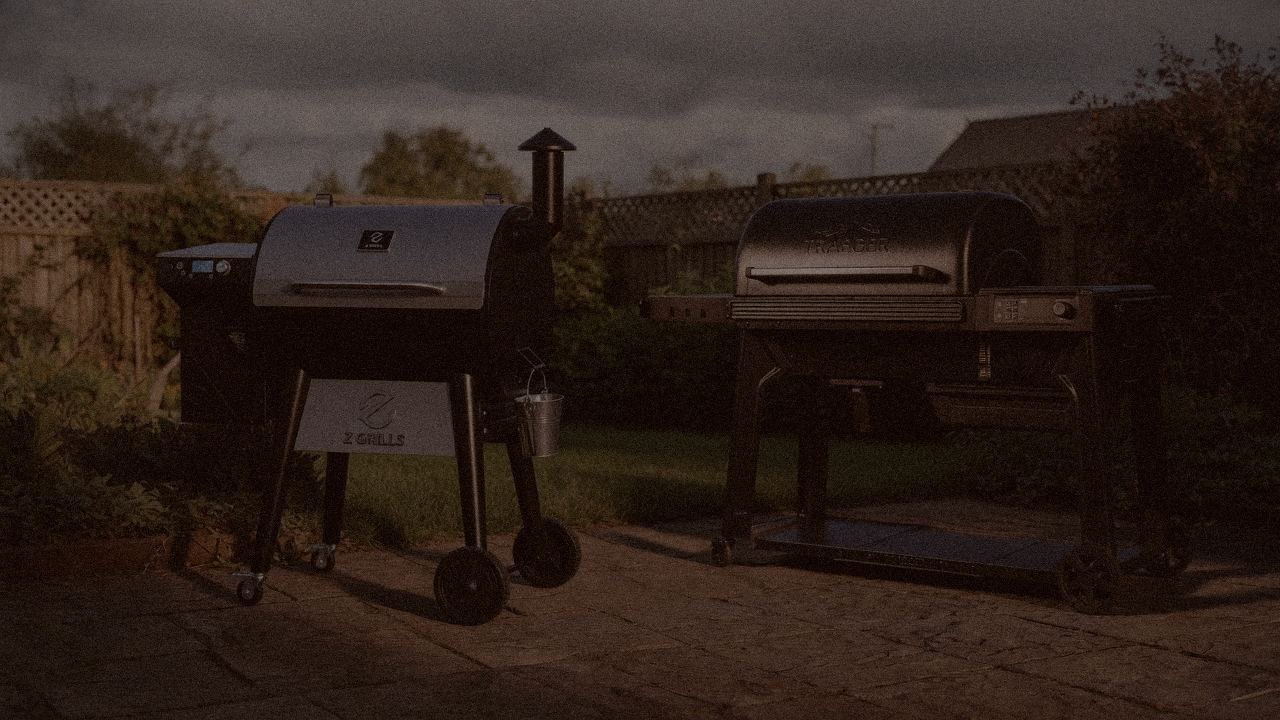
I cooked for two years without app control and never missed it. Then I ran a WiFi grill through a winter, and checking a 12-hour brisket from bed at 2 a.m. turned out not to be a gimmick. It is sleep.
Here is the honest counterweight. The app does not make food taste better, and a $20 wireless meat thermometer replicates half the benefit. On the 450A, the basic controller is a bigger limitation than the missing app, and its 15-pound hopper needs a top-up on long cooks anyway, so you are walking out to the grill regardless. The Woodridge's 24-pound hopper plus WiFi genuinely changes overnight cooks.
Winner: Traeger. Just decide whether the convenience is worth hundreds of dollars to you, because that is roughly what it costs in this matchup.
What do owners actually complain about?
Z Grills complaints center on hardware: thin metal, occasional auger or controller inconsistencies on older units, and scattered reports of auger smoke or overheat shutdowns. Traeger complaints in this pair center on output, mainly Woodridge Pro owners expecting more smoke flavor than the grill delivers.
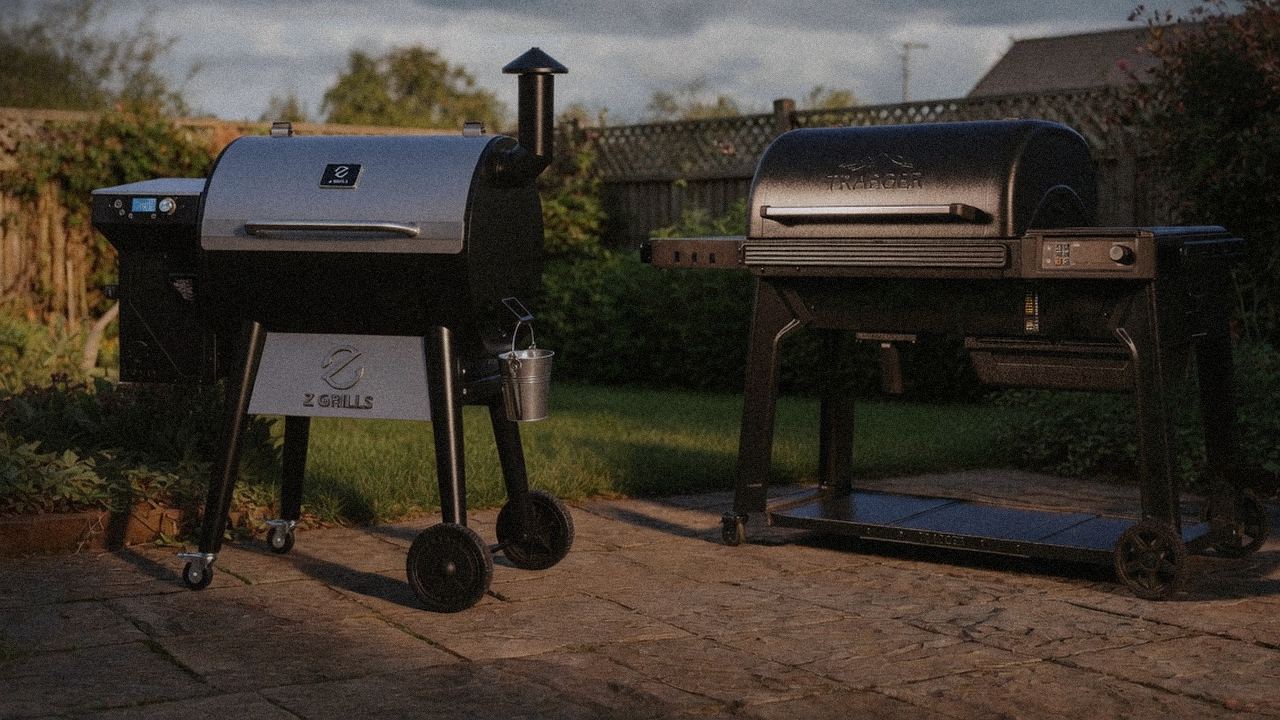
From my files, the recurring owner-reported issues:
- Z Grills 700 Series: minor controller or auger inconsistencies in older owner threads; smoke from the auger or overheating and shutdown on some units; thin metal construction noted repeatedly in the community.
- Z Grills ZPG-450A: hopper size limits longer cooks; the basic controller trails the newer PID versions; fewer long-term owner reports on file, with the same thin-build concerns as other Z models.
- Traeger Woodridge Pro: occasional Reddit reports of less smoke flavor than expected.
Read that list the right way. The Z Grills column is longer partly because there are years of owner threads to mine, while the Woodridge line is newer and its file thinner. Still the pattern holds: Z Grills problems are mechanical and covered for 3 years, Traeger problems are more often about expectations.
What does the value math say?
Traeger's own lineup prices out between $1.05 and $1.86 per square inch, and $90 to $180 per warranty year. Z Grills sells the 697-square-inch 700 Series for roughly half the price of a comparable Traeger, which is why it wears a 9 out of 9 value score on my sheet, the highest I have given either brand.
The Traeger ladder, computed from the verified prices and areas:
| Traeger model | Price | Cooking area | Price per sq in | Price per warranty year |
|---|---|---|---|---|
| Woodridge | $900 | 860 sq in | $1.05 | $90 |
| Woodridge Pro | $1,178 | 970 sq in | $1.21 | $118 |
| Woodridge Elite | $1,800 | 970 sq in | $1.86 | $180 |
I will not print a fixed Z Grills price because their discounts move week to week and a stale number is worse than none. The shape of the deal is stable though: 697 square inches, which is 122 more than a Traeger Pro 575, at a street price that typically lands around half of a comparable Traeger. Z Grills spent years manufacturing for other brands before selling under its own name, so you are buying factory-direct hardware without a marketing department's margin on top.
The catch is in the other column. Half the price also buys 3 warranty years instead of 10, no WiFi, thinner steel, and a 450°F ceiling. The value score is a 9 because the cooking per dollar is unmatched in this pair, not because it is the better machine. For most first-time buyers reading this page, the 700 Series is the one I would put on the truck.
Which one should a first-timer buy?
The Z Grills, and I say that as someone who genuinely enjoys cooking on Traegers. A first pellet grill has one job: teach you whether you love this style of cooking before you have committed serious money. The 700 Series does that job with an 8.0 ease-of-use score, the 450A at 8.5. Set the dial, add pellets, cook.
Spend the Traeger money on your first grill and the risk runs one direction: if pellet cooking turns out not to be your thing, you own an expensive patio ornament. Start with the Z Grills and the worst case is that you outgrow it in three years and buy the fancy grill with skills already built. Meat does not read spec sheets, and the practice matters more than the polish.
Who should spend the extra money on Traeger?
Three kinds of people. Anyone doing regular overnight cooks, because the 24-pound hopper and WiFi alerts turn a nervous night into a quiet one. Anyone keeping one grill for ten years, because the warranty and parts network earn their cost over that horizon. And anyone who already knows they love pellet cooking, because the $900 Woodridge at $1.05 per square inch is the most sensible entry Traeger has offered in years.
I will add the note I put in every brand matchup: my overall top pick sits outside this fight entirely. If your budget stretches past the Woodridge, the Weber Searwood XL is the grill I reach for most, and you can check the current price and then read how it stacks up against Traeger before deciding. Traeger buyers should also glance at Traeger vs Pit Boss to see the middle path between these two brands.
Is Z Grills just a Traeger copy?
No, and the history is more interesting than the accusation. Z Grills built its reputation manufacturing pellet grills for other brands before selling direct under its own name, which is why the hardware feels familiar the moment you open the lid: auger, fire pot, drip pan, diffuser. The company did not reverse-engineer anyone's grill in a shed. It was already on the factory floor.
What Z Grills lacks is the decade of controller iteration, the app team, the dealer network, and the brand equity that lets Traeger charge what it charges. You feel the difference in the app store and at resale time, not in the smoke ring. The 700 Series is simpler and cheaper, openly so; the full field of budget-vs-premium options lives on my pellet grills page.
Verdict: Z Grills for value, Traeger for polish
Z Grills wins this matchup for most buyers, and it wins on arithmetic. The 700 Series delivers 697 square inches, honest 7.5-level temperature control, and smoke flavor that at least matches the expensive grill, at roughly half the price of a comparable Traeger. That is why it carries the highest value score I have given either brand.
Traeger is the right buy the moment budget stops being the constraint. The 10-year warranty against 3, WiFi, the 500°F ceiling, the 24-pound hoppers, the support network, the resale value: that is real product, not just branding, and the $900 Woodridge prices the polish more fairly than any Traeger before it. Buy the Z Grills to find out who you are as a cook. Buy the Traeger when you already know.
Is Z Grills as good as Traeger?
On cooking results, closer than the price gap suggests: the 700 scores 7.5 for temp accuracy, stability, and smoke on my protocol, and Woodridge Pro owners even report lighter smoke than expected. On build, warranty, WiFi, and support, Traeger is clearly better. You pay for polish, not better barbecue.
How long does a Z Grills grill last?
Z Grills covers its grills for 3 years, against 10 on Traeger's Woodridge, Ironwood, and Timberline lines. Owner threads flag thin metal and occasional auger or controller issues on older units, so treat 3 years as the promise and anything beyond as a bonus earned by covering the grill.
Does Z Grills have WiFi?
No. Both the 700 Series and the ZPG-450A are dial-controlled with no app, while Traeger includes WiFi on every current grill except the Tailgater 20. If remote monitoring matters to you, that gap alone may decide the matchup; a wireless meat thermometer covers most of it for far less.
Is Traeger worth the extra money over Z Grills?
For overnight cooks and long ownership, yes: the $900 Woodridge works out to $1.05 per square inch and $90 per warranty year, with WiFi, a 24-pound hopper, and a 500°F ceiling. For a first grill or occasional weekend cooking, no: the Z Grills 700 cooks nearly as well for roughly half.
Which is more reliable, Z Grills or Traeger?
The owner-report file is longer on the Z Grills side: auger smoke, overheat shutdowns on some units, controller inconsistencies in older threads. Traeger's current complaint files are thinner and mostly about smoke flavor rather than breakdowns, and the 10-year warranty makes a failure a phone call instead of a lost grill.