Weber vs Z Grills: What Half the Money Actually Buys You in a Pellet Grill
Weber vs Z Grills after cooking on both: searing, smoke scores, the free-WiFi advantage, warranty math, and when the cheap grill is honestly the right call.
 By Oleg Galeev, cooking on pellet grills since 2020, runs the OleGrill YouTube channel
Short answer
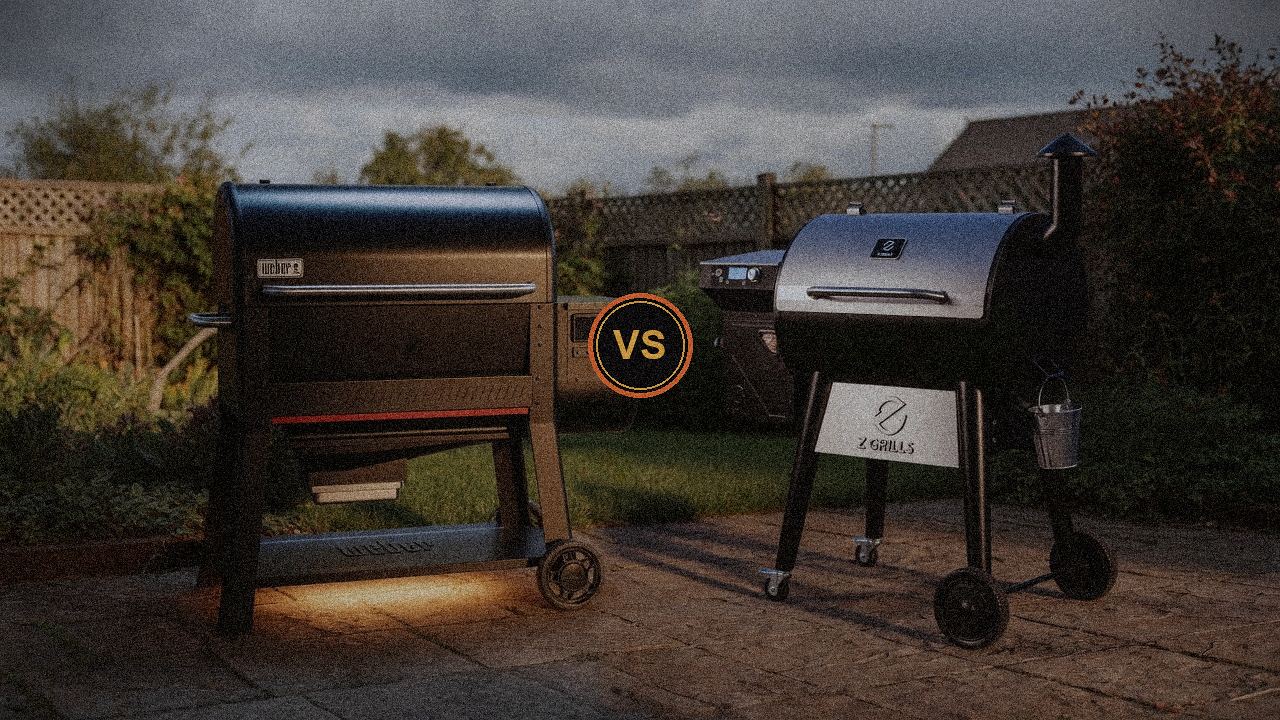
Weber wins when the budget allows: the Searwood 600 sears at 600°F, runs an 8.7/10 app with no subscription, and carries a 5 year warranty against Z Grills' 3. But the Z Grills 700 out-smoked it 7.5 to 7.3 in my scoring at roughly half the money, so it is the no-regret starter.
Live prices. Affiliate links: we may earn a commission at no extra cost to you. How this works.
Two briskets went on at 6 a.m., one in the Weber Searwood 600 and one in the Z Grills 700, and by noon my phone knew everything about the first and nothing about the second. The Weber pinged me pit temps and probe curves while I ran errands. The Z Grills just sat there doing its job in silence, dial set, fan humming, asking me to walk outside like an animal if I wanted a number. Both briskets came off with bark I would serve to anyone. It is one of the matchups behind the best wood pellet grills rankings on this site.
That day is this whole matchup in miniature. One brand sells refinement. The other sells the absence of everything except the fire.
Pull temps still follow the USDA safe minimum internal temperatures for poultry, pork, and ground beef, no matter which hopper you bought.
Warranty language is what Weber's support pages actually publishes, not a forum guess.
What separates Weber and Z Grills on paper?
Weber's Searwood line brings a 600°F ceiling, direct searing, subscription-free WiFi, 20 pound hoppers, and 5 year warranties for $999 to $1,299. Z Grills answers with 450°F, no WiFi, no sear hardware, 3 year coverage, and street prices that undercut Weber by roughly half. The spec sheet is a rout; the price tag is the rebuttal.
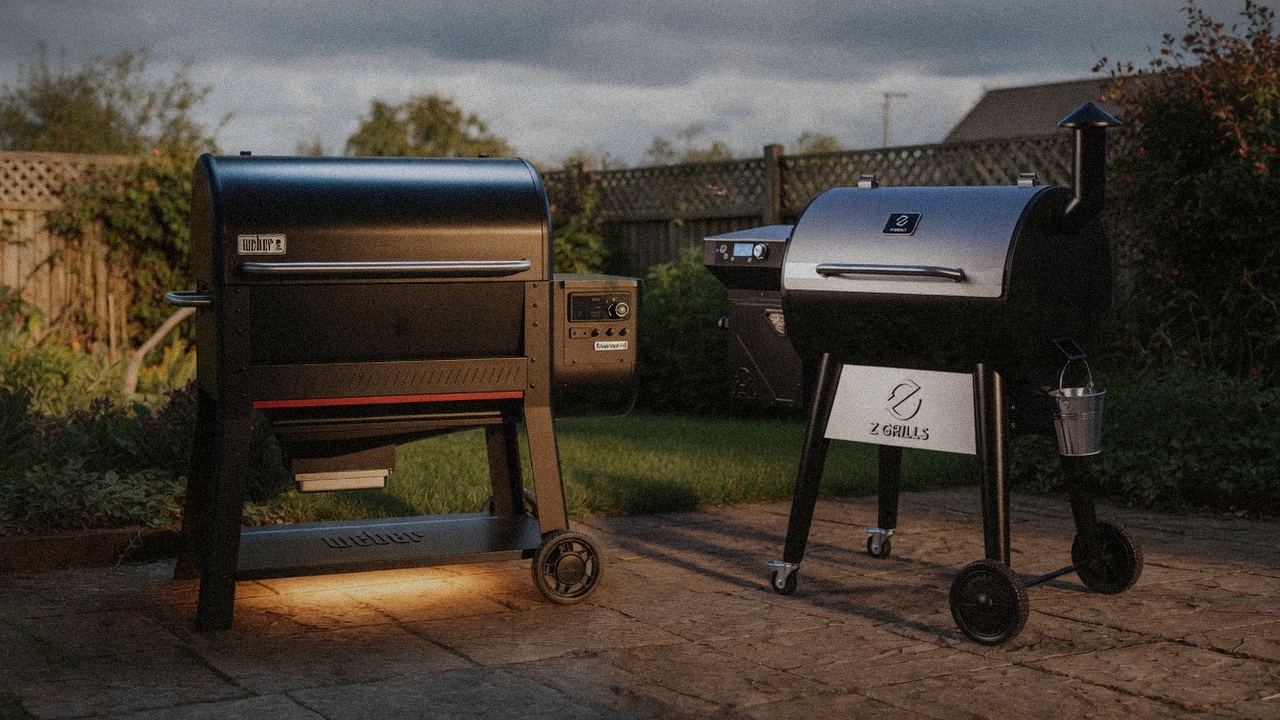
Here are the four current models, side by side. A dash means the number is not in my verified data and I will not guess.
| Spec | Searwood 600 | Searwood XL 600 | Z Grills 700 | Z Grills 450A |
|---|---|---|---|---|
| Price on file | $999 | $1,299 | - | - |
| Cooking area | 648 sq in | 972 sq in | 697 sq in | 459 sq in |
| Hopper | 20 lb | 20 lb | - | 15 lb |
| Max temp | 600°F | 600°F | 450°F | 450°F |
| WiFi | Yes | Yes | No | No |
| Direct sear | Yes | Yes | No | No |
| Warranty | 5 years | 5 years | 3 years | 3 years |
Notice the cooking-area row before you write Z Grills off. The 700 Series actually holds more grate space than the Searwood 600, 697 square inches against 648. Everything else on the sheet tilts Weber, hard.
Which holds temperature better?
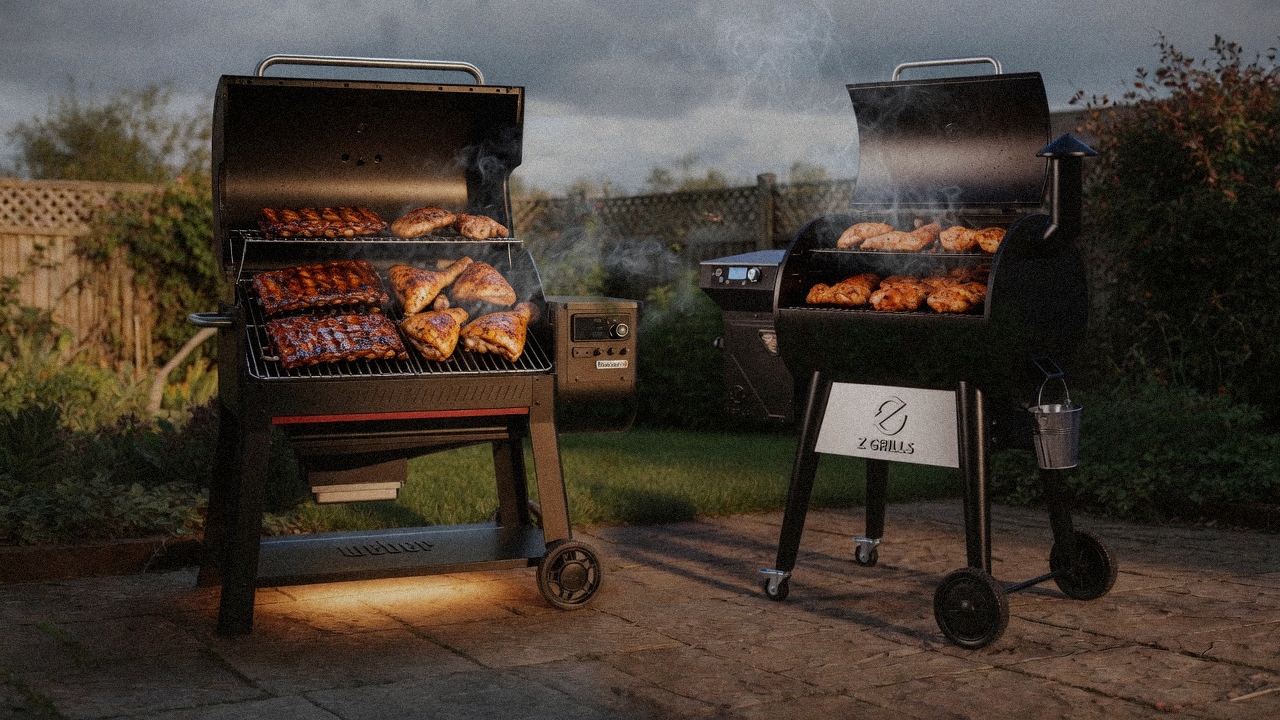
The Weber, by half a point where it counts. The Searwood 600 scored 8/10 for both temperature accuracy and stability on my protocol, while the Z Grills 700 and 450A each posted 7.5/10 on both. All four are brisket-safe numbers. None of them wander enough to cost you a cook.
Half a point sounds like nothing until you are riding out a windy afternoon at 225°F, which is where the Weber's tighter control earns its keep. My scoring method, logged probes across full cooks, is laid out on the how we test page, and a 7.5 on that scale is a grill I trust overnight. The Z Grills' basic controller does honest work; it just corrects a little slower and swings a little wider than Weber's.
The caveat lives in the problems file, not the score sheet. Searwood owners in cold climates have reported occasional pellet flow trouble in winter, and some Z Grills 700 units have overheated and shut down. Neither issue showed up in my cooks, but both recur in owner threads often enough to note.
Who makes more smoke?
The Z Grills 700, and I am happy to say so. It scored 7.5/10 on smoke against 7.3/10 for both Searwoods, with the 450A at 7/10. The cheap grill out-smoked the expensive one in my scoring, which tells you flavor is the wrong reason to spend Weber money.
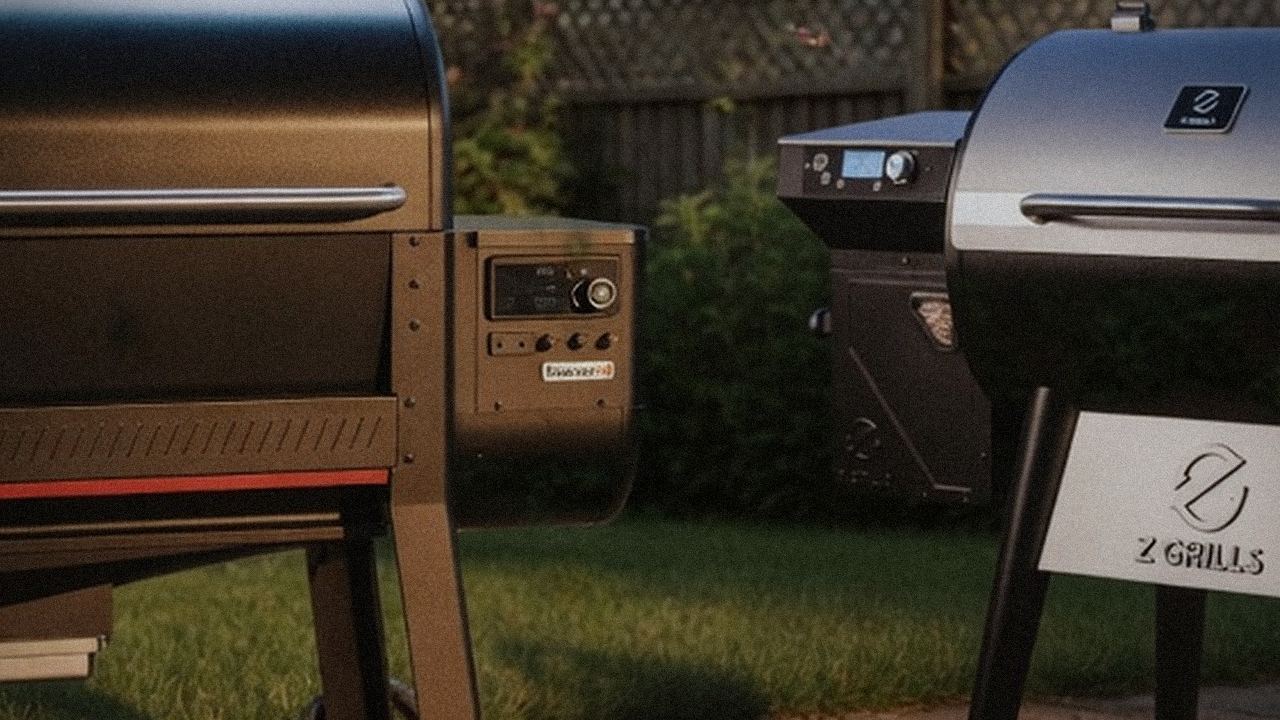
This surprises people and it should not. Every grill here makes smoke the same way, an auger feeding hardwood pellets into a firepot with a fan driving the burn, the design Wikipedia's pellet grill page traces back decades. At 225°F the fire is small and lazy no matter what the hopper cost, and the Z Grills 700's slightly better smoke number matches what my nose reported: ribs off the Z carry every bit as much wood as ribs off the Weber.
| Model | Smoke | Temp accuracy | Temp stability | Ease of use |
|---|---|---|---|---|
| Searwood 600 | 7.3/10 | 8/10 | 8/10 | 8.7/10 |
| Searwood XL 600 | 7.3/10 | 8/10 | 8/10 | 8.7/10 |
| Z Grills 700 | 7.5/10 | 7.5/10 | 7.5/10 | 8/10 |
| Z Grills 450A | 7/10 | 7.5/10 | 7.5/10 | 8.5/10 |
Z Grills leans on that same low-and-slow parity to survive against the biggest name in the game, a fight I score round by round in Z Grills vs Traeger.
Which one sears better?
No contest. The Searwoods hit 600°F with direct-flame access and scored 8.3/10 in my sear testing, the best crust I have gotten from a pellet grill under $1,500. Both Z Grills top out at 450°F of indirect heat and posted 5.5/10. One is a searing machine; the other needs a cast iron workaround.
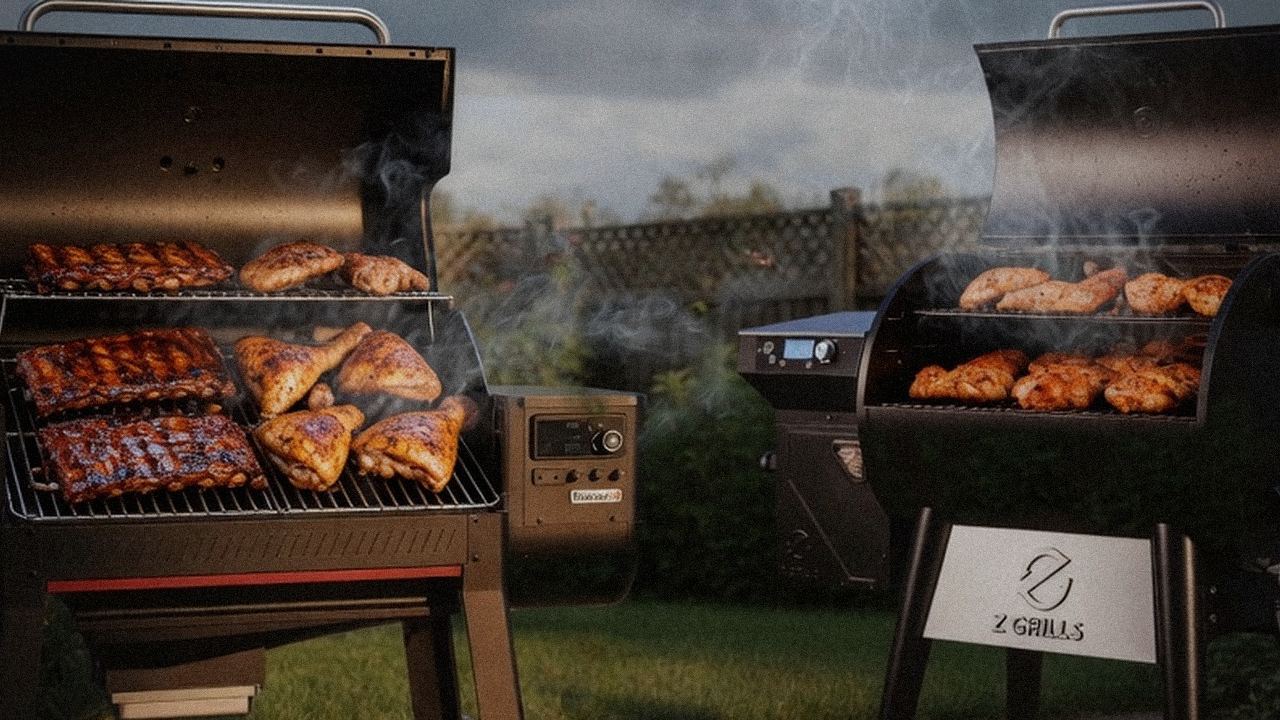
The Searwood is the grill Weber built after the SmokeFire taught it every hard lesson, and the sear mode is the payoff: open airflow, live flame under the grates, a ribeye crusted in minutes. That 150°F ceiling gap between the brands is not a spec-sheet technicality. It is the difference between a grill that replaces your gasser and a grill that sits beside it. On the Z Grills I preheat a cast iron pan for steaks, which works fine and also quietly admits the grill cannot do it alone.
One honest note from Weber's own problem file: at high heat, some owners report ash circulating onto food. I have seen a dusting on hot-and-fast cooks. A firepot vacuum before sear sessions keeps it from being a real annoyance.
Does Weber's WiFi actually matter?
More than I expected. Weber Connect scored 8.7/10 in my app testing, tracks pit and probe temps with graphs and alerts, and charges no subscription, ever. Z Grills offers nothing to compare, no WiFi on either model. For overnight cooks and workday briskets, that gap changes how you live.
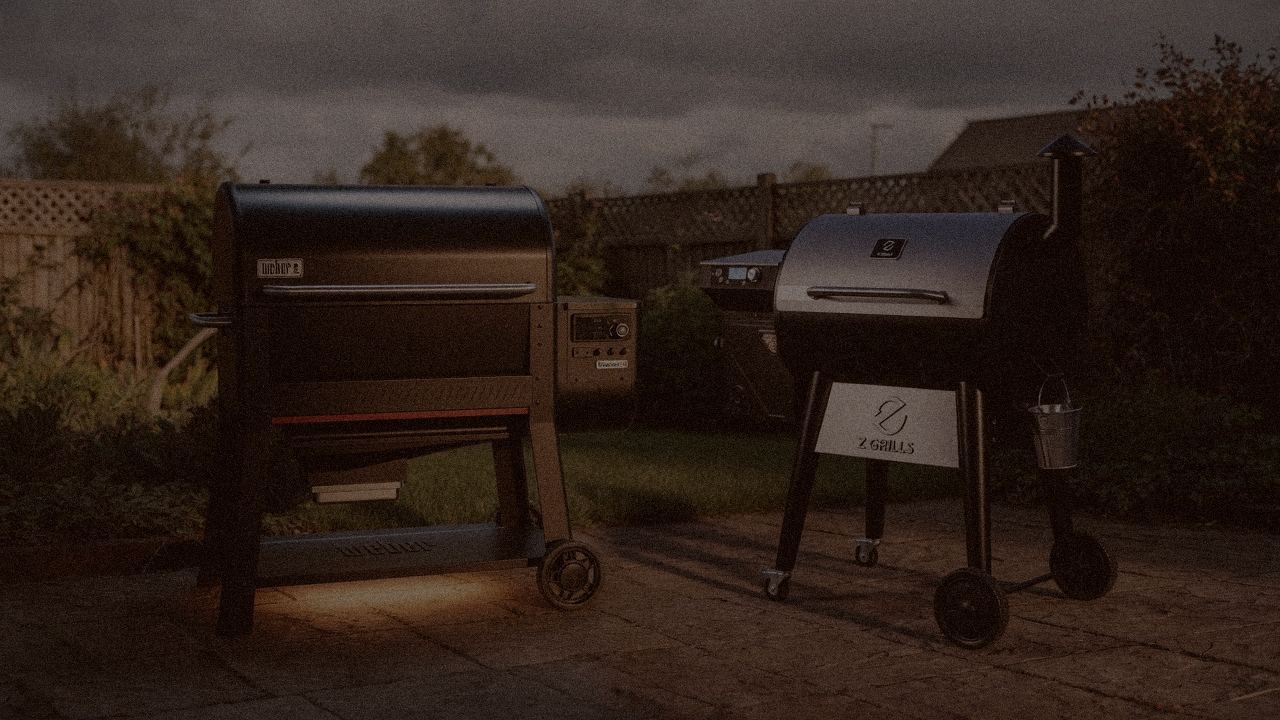
I was a WiFi skeptic for years, and the Searwood converted me one pork butt at a time. Watching the stall from bed at 2 a.m. instead of padding outside in slippers is not a gimmick, it is sleep.
The Z Grills counterargument is real, though. No app means no pairing failures, no firmware updates, no outages between you and dinner. The 450A scored 8.5/10 for ease of use on one dial and a probe port. Some people will read this section and hear a reason to buy the Z. I respect them.
Which is built to last?
Weber, on the evidence available. The Searwoods scored 8/10 on build with 5 year warranties; both Z Grills scored 6.5/10 with 3 years, and thin metal is the standing complaint across their owner communities. Weber's E10 error codes are the asterisk on its side of the ledger.
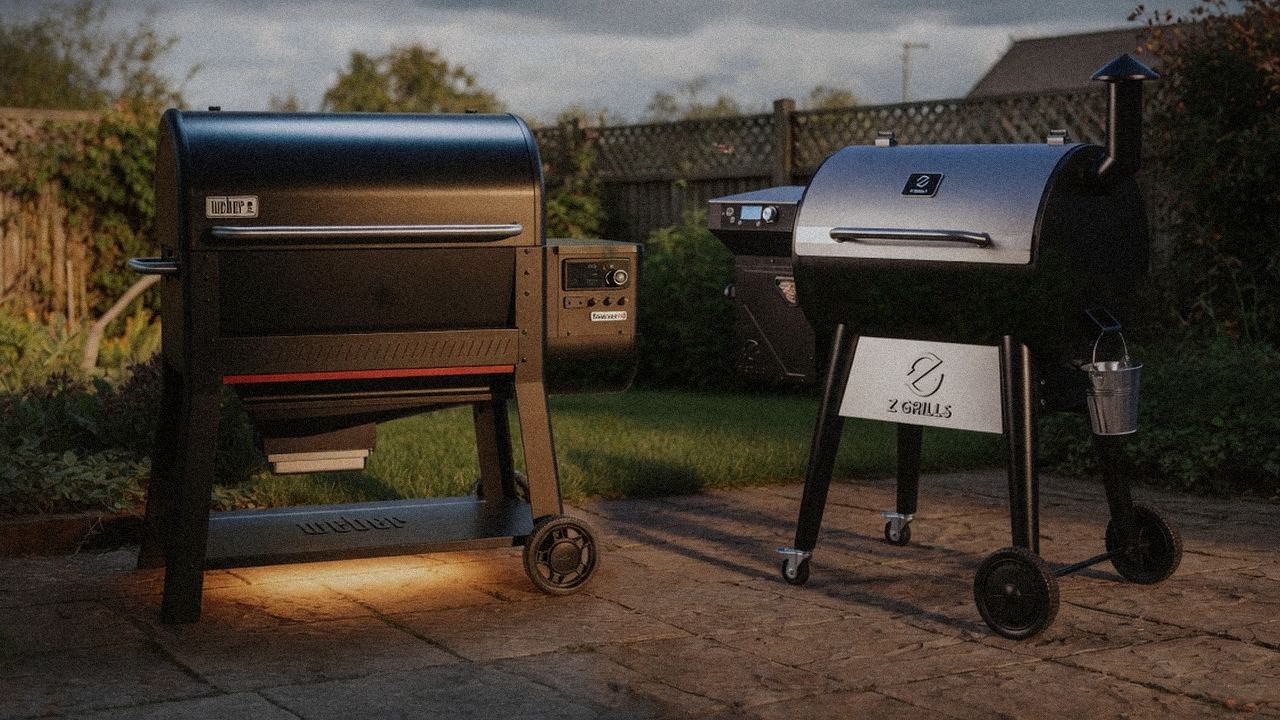
Put a hand on each lid and you can feel where the missing money went. The Z Grills panels flex, shed heat faster in wind, and have carried thin-steel complaints through owner threads for years. The Weber feels like a Weber, dense and tight, and the company backs it for five years against Z Grills' three.
Weber is not blameless. Searwood owners report occasional E10 error codes and stubborn resets after power loss, and the side tables that should be standard at $999 cost extra. Small-part gripes on both sides; a structural gap in only one direction.
What do owners complain about?
Weber owners flag ash blowback at high heat, E10 error codes after power loss, accessories sold separately, and cold-weather pellet flow. Z Grills owners cite thin metal, controller and auger hiccups in older units, overheat shutdowns, and the 450A's 15 pound hopper running tight on long cooks.
Read the two lists as personalities. Weber's complaints are refinement complaints, rough edges on an ambitious machine. Z Grills' complaints are cost complaints, the sound of corners being cut exactly where the price tag said they would be. Neither list scares me off either brand.
Which gives you more grill for your money?
By verified numbers, the Searwood 600 costs $1.54 per square inch and $200 per warranty year; the XL runs $1.34 and $260. Z Grills prices move too often to print, but the 700's 9/10 value score, my highest in this matchup, tells you where its street price lands.
| Model | Price on file | Cooking area | Per sq in | Warranty | Sq in per warranty year |
|---|---|---|---|---|---|
| Searwood 600 | $999 | 648 sq in | $1.54 | 5 yr | 130 |
| Searwood XL 600 | $1,299 | 972 sq in | $1.34 | 5 yr | 194 |
| Z Grills 700 | - | 697 sq in | - | 3 yr | 232 |
| Z Grills 450A | - | 459 sq in | - | 3 yr | 153 |
Two honest readings of that table. First, within Weber, the XL is the better buy per inch, and it holds the number one spot on my full pellet grills ranking. Second, my value scores ran 8.7/10 for the Searwood 600, 8/10 for the XL, 9/10 for the Z Grills 700, and 8.5 for the 450A, so by pure dollars-to-dinner math the Z wins even against a Weber I rate this highly. Both Searwoods carry a 7.9/10 overall score on my weighted protocol; the Z Grills models have not been through the full overall scoring yet, so no combined number gets printed for them.
Still, if the budget stretches to four figures, the grill I hand people is the Searwood 600. It smokes within a whisker of the Z, then does everything the Z cannot: sear, connect, and stay covered for five years. You can check the current price and see where it sits this week against the full ranking.
Which one should a first-timer buy?
The Z Grills 700, if the money matters at all. Your first year of pellet cooking is ribs, butts, chicken, and brisket, all of it low and slow, all of it inside the Z's wheelhouse, and it out-smoked the Weber in my scoring. Spend the savings on a good thermometer and better meat.
Beginners burn their tuition on technique, not hardware, and every early mistake plays out identically on a $500 grill and a $1,000 one. The Z's one-dial simplicity keeps the learning curve pointed at the food. Here is the trap, though: new pellet owners become steak people faster than they expect, and the day you crave real crust, the Z has no answer. If you already know that day is coming, skip the intermediate step. And if you are cross-shopping the budget tier itself, the Z faces a tougher fight in Pit Boss vs Z Grills, where the competition sears too.
Who should spend the extra money on the Weber?
Anyone replacing a gas grill instead of adding a smoker beside one. The Searwood's extra money buys a 600°F sear, an app that ends 2 a.m. patio checks, two more warranty years, and build quality you can feel in the lid. If it will be the only cooker you own, buy the Weber.
The Searwood is a one-grill answer, and that is the whole case. Tuesday burgers, Friday ribeyes, Sunday brisket, all on the same 648 square inches without a cast iron crutch or a second cooker. Weber's premium argument holds up against mid-tier rivals too; I put it through the same gauntlet in Pit Boss vs Weber, and the refinement gap tells the same story there. One warning while shopping: used SmokeFire units float around at tempting prices. That grill scored 6.8/10 with me, carries a record of flare-ups, auger jams, and temperature swings, and is discontinued. The Searwood exists because of it. Buy the lesson, not the mistake.
How do they score on our weighted test method?
Every grill on this site runs the same ten-part method, weighted by what actually changes your food. Here is Weber Searwood XL 600 against Z Grills 700 Series (ZPG-7002), row by row, with the weight each test carries.
| Test | Weight | Weber Searwood XL 600 | Z Grills 700 Series (ZPG-7002) |
|---|---|---|---|
| Temperature accuracy | 15% | 8/10 | 7.5/10 |
| Temperature stability | 15% | 8/10 | 7.5/10 |
| Smoke production | 15% | 7.3/10 | 7.5/10 |
| Build quality | 10% | 8/10 | 6.5/10 |
| Searing ability | 10% | 8.3/10 | 5.5/10 |
| Ease of use | 10% | 8.7/10 | 8/10 |
| Cleaning | 10% | 7.3/10 | 7/10 |
| App / controller | 5% | 8.7/10 | n/a |
| Pellet efficiency | 5% | 7/10 | 7/10 |
| Value | 5% | 8/10 | 9/10 |
| Weighted total | 100% | 7.9/10 | not yet complete |
Our ten-part weighted method, scored from verified research and bench work. Higher wins each row; a weighted total prints only when all ten dimensions are settled. Full protocol on how we test.
Verdict: Weber or Z Grills?
Weber wins when the budget allows. The Searwood 600 sears at 600°F, runs the best subscription-free app I have tested at 8.7/10, and doubles Z Grills' warranty years. Z Grills is the no-regret starter: it smokes slightly better, costs roughly half, and its 9/10 value score is earned.
This is a premium-versus-budget fight where both fighters answer their own question honestly. The Searwood 600 is what a pellet grill looks like when a company with Weber's engineering budget decides to get it right on the second try, and it is the grill I reach for first on my own deck. The Z Grills 700 is what a pellet grill looks like stripped to the studs, and the food coming off it does not apologize for the price. Buy the Weber if it will be your only grill or your last one for a decade. Buy the Z Grills if you are testing the pellet waters, only smoke low and slow, or simply refuse to spend four figures on the same bark.
Is Weber better than Z Grills?
Overall, yes. The Weber Searwood offers a 600°F ceiling with direct searing against Z Grills' 450°F, subscription-free WiFi against none, an 8/10 build score against 6.5, and a 5 year warranty against 3. Z Grills wins on price and edged Weber on smoke score, 7.5 to 7.3.
How long do Z Grills pellet grills last?
The 3 year warranty is the only hard number I will print. Owner communities consistently note thin metal on Z Grills, and both models scored 6.5/10 on build in my testing. Kept covered, cleaned, and out of standing weather, they keep cooking, but I treat their longevity as unproven rather than proven.
Can you sear a steak on a Z Grills pellet grill?
Not properly on the grates. Both the 700 and 450A top out at 450°F with no direct-flame hardware and scored 5.5/10 in my sear testing. A preheated cast iron pan inside the grill produces real crust. The Searwood's 600°F direct mode scored 8.3/10 doing the same job with no workaround.
Does the Weber Searwood require an app subscription?
No. Weber Connect is free, with no subscription now or planned, and it scored 8.7/10 in my testing for temperature graphs, probe alerts, and remote monitoring. That matters in a market drifting toward paywalled features. Neither Z Grills model in this comparison offers WiFi at any price.
Is the Weber Searwood more reliable than Z Grills?
The evidence leans Weber: better build scores, 8/10 against 6.5, and five warranty years against three. Neither is spotless. Searwood owners report occasional E10 error codes and cold-weather pellet flow hiccups, while older Z Grills threads describe controller and auger inconsistencies plus occasional overheat shutdowns.